
How to Plan a Private Luxury Jewish Heritage Tour of Morocco: Routes, Historic Sites, Kosher Travel and Costs
For most travelers, 10 to 14 days is the ideal length for a private Jewish heritage journey through Morocco - enough time to move unhurriedly between Casablanca, Fes, Marrakech and Essaouira, with a night or two in the Sahara added when the calendar allows. Shorter or longer versions both exist, but this range covers the country's principal Jewish sites without rushing between them.
Why Morocco Matters in Jewish History
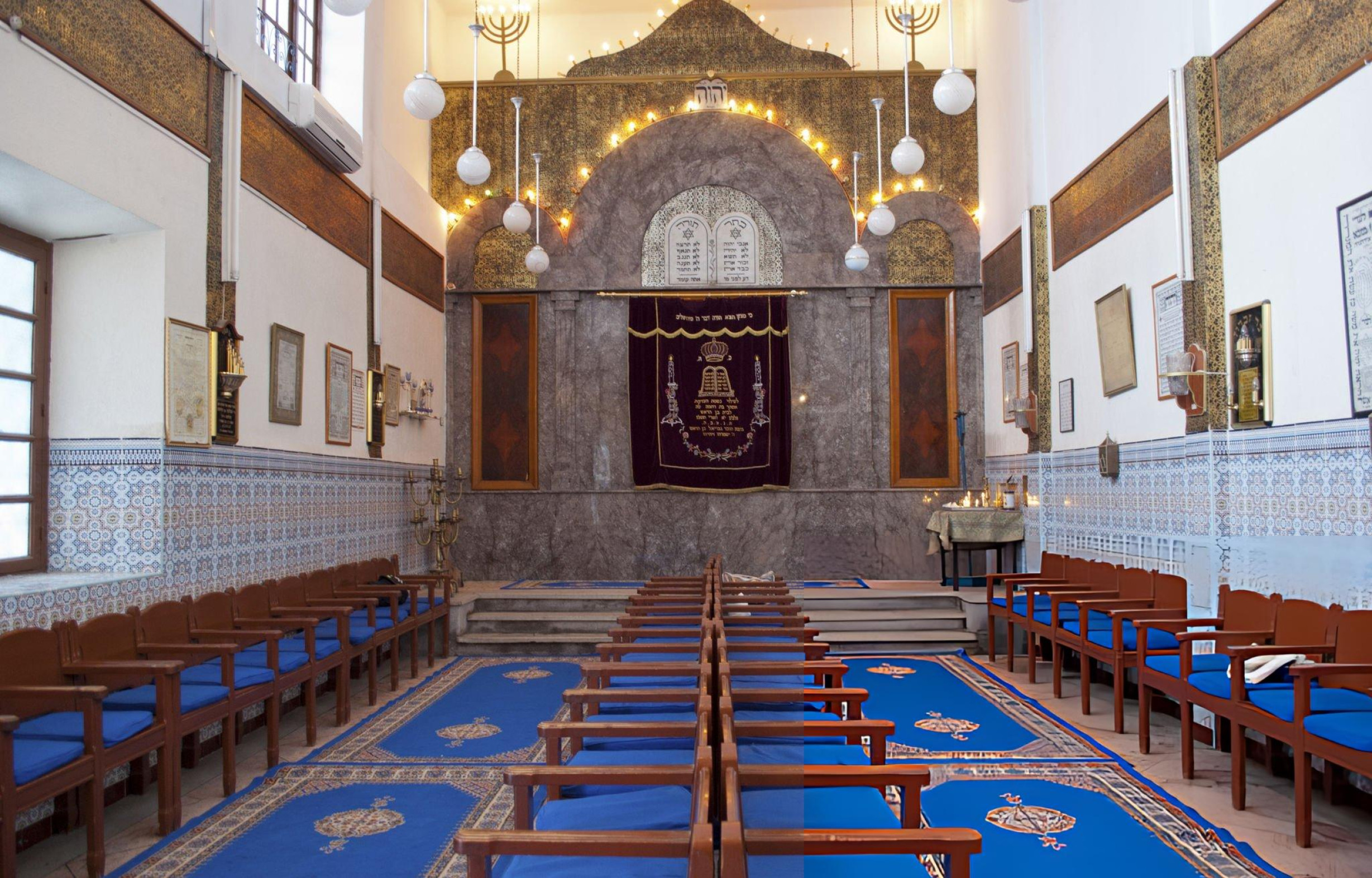
Morocco is home to one of the oldest and most continuous Jewish communities in the Muslim world, with a documented presence stretching back roughly two thousand years and a further wave of Sephardic arrivals following the 1492 expulsion from Spain. At its peak in the mid-20th century, the community numbered around a quarter of a million people - the largest Jewish population in any Muslim-majority country. Most of that community emigrated to Israel, France, Canada and elsewhere between the 1950s and 1970s, but the physical and cultural record of that history remains remarkably intact: restored synagogues, historic Jewish quarters known as mellahs, cemeteries, and a living, government-supported institution dedicated to preserving Judeo-Moroccan heritage.
That preservation effort is not incidental. Morocco is the only country in the Muslim world with a dedicated Jewish museum - the Museum of Moroccan Judaism in Casablanca, founded in 1997 - and the Moroccan state has funded major restoration projects, including Bayt Dakira in Essaouira, a heritage center built around the restored Simon Attias Synagogue and inaugurated in 2020 with King Mohammed VI in attendance. For travelers exploring their own family roots or simply the broader arc of Sephardic and Moroccan Jewish history, this is one of the few places where that history can be walked through rather than only read about.
See how this fits into a full itinerary
If you'd rather start from a ready-built framework than plan from scratch, our Luxury & Private Jewish Heritage Tours in Morocco page outlines the private journeys referenced throughout this guide.
The Most Important Jewish Heritage Destinations
A well-built itinerary draws from a defined set of historically significant sites. Not every city needs equal time, and not every listed site will be included on every trip - what follows is the core set most private itineraries draw from.
Casablanca
Home to the Museum of Moroccan Judaism and Temple Beth-El, one of the city's active synagogues, Casablanca also holds the largest remaining organized Jewish community in Morocco today, along with the country's best access to kosher-certified dining.
Fes
The Fes mellah, established in 1438, is considered Morocco's first purpose-built Jewish quarter. Within it stands the Ibn Danan Synagogue, a 17th-century building restored by the World Monuments Fund in partnership with Morocco's Ministry of Culture and reopened in 1999. It is widely regarded as one of the only fully intact historic synagogues remaining in the country, and the Slat Al Fassiyine Synagogue nearby has also undergone restoration in recent years.
Marrakech
The Marrakech mellah, Morocco's second-oldest Jewish quarter, contains the Lazama Synagogue (Slat al-Azama), still in occasional use, along with the Miara Jewish Cemetery - one of the largest Jewish cemeteries in Morocco, with graves marked in Hebrew, French and Spanish.
Essaouira
Once home to a substantial Jewish merchant community that shaped the city's Atlantic trade, Essaouira's mellah now houses Bayt Dakira, built around the restored Simon Attias Synagogue, along with sites associated with the locally revered Rabbi Haim Pinto.
Meknes and Rabat
Smaller but historically significant Jewish quarters and cemeteries exist in both cities, generally included on longer itineraries rather than shorter ones given the additional driving time involved.
Comparing 8-, 10-, 12-, 14- and 21-Day Journeys
The right length depends on how many regions you want to cover and how much time you want at each stop, not on a single "correct" answer.
| Duration | Typical Focus | Best Suited To |
|---|---|---|
| 8 Days | Casablanca, Fes, Marrakech | Travelers with limited time who want the three core cities without the Sahara |
| 10 Days | Casablanca, Fes, Marrakech, Essaouira | The most common balance of pace and coverage |
| 12 Days | Core cities plus added time in Marrakech and a slower overall pace | Travelers who prefer fewer transitions and more free time at each stop |
| 14 Days | Core cities plus the Sahara | Travelers who want to add the desert without compressing the heritage itinerary |
| 21 Days | A comprehensive journey including Meknes, Rabat and the Sahara | Multigenerational families or travelers who want genuine depth, not just breadth |
Each of these exists as a built itinerary rather than a template we assemble from scratch - see the individual pages linked above for day-by-day detail, or read on for how to think about choosing between them.
What "Private Luxury" Should Genuinely Include
The phrase gets used loosely across the industry, so it's worth being specific about what it means in practice on a Desert Morocco Tour itinerary - and, just as importantly, what it doesn't automatically mean.
- A fully private vehicle and driver - modern, air-conditioned transportation with no unrelated travelers sharing your itinerary or schedule
- A dedicated English-speaking driver throughout the journey, distinct from the licensed local guides who provide historical and cultural context at specific sites
- Handpicked boutique riads and four- or five-star hotels, selected for location, character and comfort rather than the cheapest available option in each city
- Licensed local guides at major heritage sites, who can speak to the history of each mellah, synagogue and cemetery with appropriate depth
- Private airport transfers at both ends of the journey
- A fully customized itinerary built around your dates, family-origin interests, and pace preferences, rather than a fixed group departure
What private luxury does not automatically include: guaranteed synagogue access on specific dates, arranged meetings with community members or rabbis, kosher certification at every meal, or professional genealogical research. These are either conditional on local circumstances or separate, specialized services - and we'd rather tell you that plainly now than have it surface as a disappointment on arrival.
Building this around your own pace
If a fixed itinerary doesn't fit your dates or interests, our Tailor-Made Morocco Tours page explains how a fully custom route is built from the ground up.
Kosher Food and Shabbat Planning
This is one of the areas where clarity matters most, and where we draw a firm line between what's certified and what's simply respectful.
Kosher-certified dining exists in Morocco, but it is limited and concentrated almost entirely in Casablanca, where the organized Jewish community maintains kosher infrastructure. Outside Casablanca, restaurants offering "kosher-style" or vegetarian meals are more common than formally certified kosher kitchens - these are genuinely different things, and we won't blur that distinction to make an itinerary sound more accommodating than it is. Travelers who keep strict kashrut should discuss exact requirements with us before booking so we can be honest about what can and cannot be arranged at each stop on the route.
Shabbat planning generally means building rest days or lighter-pace days into the itinerary around Friday evening and Saturday, and, where the community's own schedule allows, planning to be in a city with an active synagogue over Shabbat. Whether a specific service, a minyan, or a meal invitation can be arranged depends on the local community's calendar at the time of travel - this is coordinated as travel dates approach, not guaranteed at the planning stage.
Personalizing the Journey Around Family Roots
Many travelers come to Morocco specifically to see a town, mellah or cemetery connected to their own family history. If you can tell us the town, region or family name associated with your Moroccan Jewish roots, we can build the route to include it, provided the location is accessible within your itinerary's timeframe. This is itinerary personalization based on the information you provide - it is not professional genealogical research, and we don't claim to trace family trees or verify lineage. If deeper genealogical work is something you're looking for, that's a distinct specialized service worth arranging separately, before or alongside your trip.
Accessibility and Pacing for Senior and Multigenerational Travelers
Morocco's historic medinas and mellahs involve walking on uneven stone streets, and some sites - including certain synagogues and cemetery sections - have stairs or narrow doorways that can't be avoided entirely. A private itinerary gives real control over this: the pace can be slowed, rest stops added between sites, walking distances shortened where alternatives exist, and hotel choices weighted toward properties with easier access. For multigenerational family groups traveling together, this flexibility is often the single biggest advantage over a fixed group tour, where the itinerary and pace are set for the whole group regardless of individual needs. See our Morocco Tours for Seniors page for more on how pacing is adjusted for comfort.
Combining Jewish Heritage With the Sahara
Fourteen- and twenty-one-day itineraries typically extend beyond the imperial cities to include a night or two in the Sahara, usually via Ouarzazate and the Dades Valley toward Merzouga and the dunes of Erg Chebbi. This isn't a historical extension of the heritage itinerary so much as a complementary contrast - Morocco's landscape alongside its history - and it works best when there's enough time to add it without compressing the days spent at heritage sites. On shorter 8- or 10-day journeys, we generally don't recommend forcing in a Sahara detour, since it tends to come at the expense of time in Fes or Marrakech that would otherwise go toward the trip's core purpose.
What Affects the Cost of a Private Jewish Heritage Tour
There's no single price that applies across every itinerary - cost is shaped by several variables working together:
- Trip length - an 8-day journey costs meaningfully less than a 21-day one, proportional to nights and driving distance
- Hotel category - boutique riads versus five-star properties shift the price band considerably
- Group size - per-person cost generally decreases as more travelers share the private vehicle and guide fees
- Season - spring and autumn carry higher demand than the height of summer
- Whether the Sahara is included - adding desert nights adds both distance and a specialized camp stay
- Level of customization - a highly bespoke route with specific ancestral-town stops or added experiences takes more planning than a standard itinerary
Because of this range, we don't publish a single headline price - the most accurate way to understand cost for your specific plans is to request a quote with your dates, traveler count and preferred hotel category.
Best Seasons to Travel
Spring (roughly March through May) and autumn (September through November) offer the most comfortable temperatures for walking through medinas and visiting outdoor heritage sites, and tend to be the most popular booking windows as a result. Summer brings genuine heat, particularly in Fes and Marrakech, and any Sahara extension in July or August requires early starts and shaded midday breaks. Winter is mild in the cities but cold at night in the desert and mountains. Travel timed around major Jewish holidays should be planned well ahead, since community schedules can affect site hours and service availability during those periods.
How to Select a Trustworthy Moroccan Tour Operator
A few practical questions are worth asking before booking with any operator, ourselves included:
- Is the company Morocco-based, with direct local knowledge of routes, guides and accommodation - or is it a reseller working through a third party?
- Does the operator distinguish clearly between confirmed inclusions and conditional experiences (like synagogue access or community meetings), or does everything sound guaranteed?
- Are licensed local guides used at heritage sites, and can their credentials be confirmed?
- Is kosher dining described accurately - certified versus kosher-style - rather than glossed over?
- Can the itinerary be genuinely customized, or is it a fixed template with a few swapped hotel names?
Desert Morocco Tour operates as a Morocco-based private travel specialist - Morocco Elite Journeys - building tailor-made itineraries rather than reselling fixed group packages, which is why the distinctions above matter enough to spell out here rather than leave implied.
Frequently Asked Questions
How many days should a Jewish heritage tour of Morocco be?
For most travelers, 10 to 14 days strikes the best balance - enough time to see Casablanca, Fes, Marrakech and Essaouira at an unhurried pace, with room to add the Sahara if time allows. Shorter 8-day journeys work well for travelers with limited time who want to focus on Casablanca, Fes and Marrakech alone.
Can synagogue visits and Shabbat services be guaranteed in advance?
No reputable operator can guarantee synagogue access, minyan availability, or a Rabbi's presence on any given date, since these depend on the local community's own schedule. What can be arranged is an itinerary built around the likely opportunities, with confirmation sought closer to your travel dates.
Is kosher food available in Morocco?
Kosher-certified dining is limited and concentrated mainly in Casablanca, where a small number of certified restaurants and the Jewish community infrastructure exist. Outside Casablanca, most itineraries rely on kosher-style or vegetarian meal planning rather than formal certification, and travelers with strict observance requirements should discuss this in detail before booking.
Can a Jewish heritage tour include the family's ancestral town?
Yes, an itinerary can be built to include a specific ancestral town or mellah a family wants to visit, provided the location is identified in advance. This is itinerary personalization based on family-provided information, not professional genealogical research, which is a separate specialized service.
Is Morocco a good destination for senior or mobility-limited travelers?
Morocco's imperial cities involve walking through medinas with uneven stone streets and some stairs, which is worth planning around for travelers with mobility limitations. A private tour allows the pace to be slowed, rest stops added, and walking distances shortened, though some historic mellah alleys cannot be avoided entirely.
How much does a private luxury Jewish heritage tour of Morocco cost?
Cost depends on trip length, hotel category, group size, season and whether the Sahara is included, so there is no single fixed price. Requesting a personalized quote with your dates, traveler count and accommodation preference is the most accurate way to get a real number.
What is the best time of year to visit Morocco for a Jewish heritage tour?
Spring (March to May) and autumn (September to November) offer the most comfortable temperatures for walking through medinas and visiting outdoor sites. Travel around major Jewish holidays should be planned well in advance, since community schedules and some site hours may be affected.
Let's design your route.
Share the details below and we'll put together a personalized proposal rather than a generic template:
- Your preferred travel dates
- Number of travelers
- Preferred hotel category (boutique riad, 4-star, 5-star)
- Any family-origin towns or regions you'd like included
- Dietary or religious observance requirements
- Whether you'd like to include the Sahara
Sources & Further Reading
Related journeys: Luxury & Private Jewish Heritage Tours in Morocco · Luxury Morocco Tours · Tailor-Made Morocco Tours