
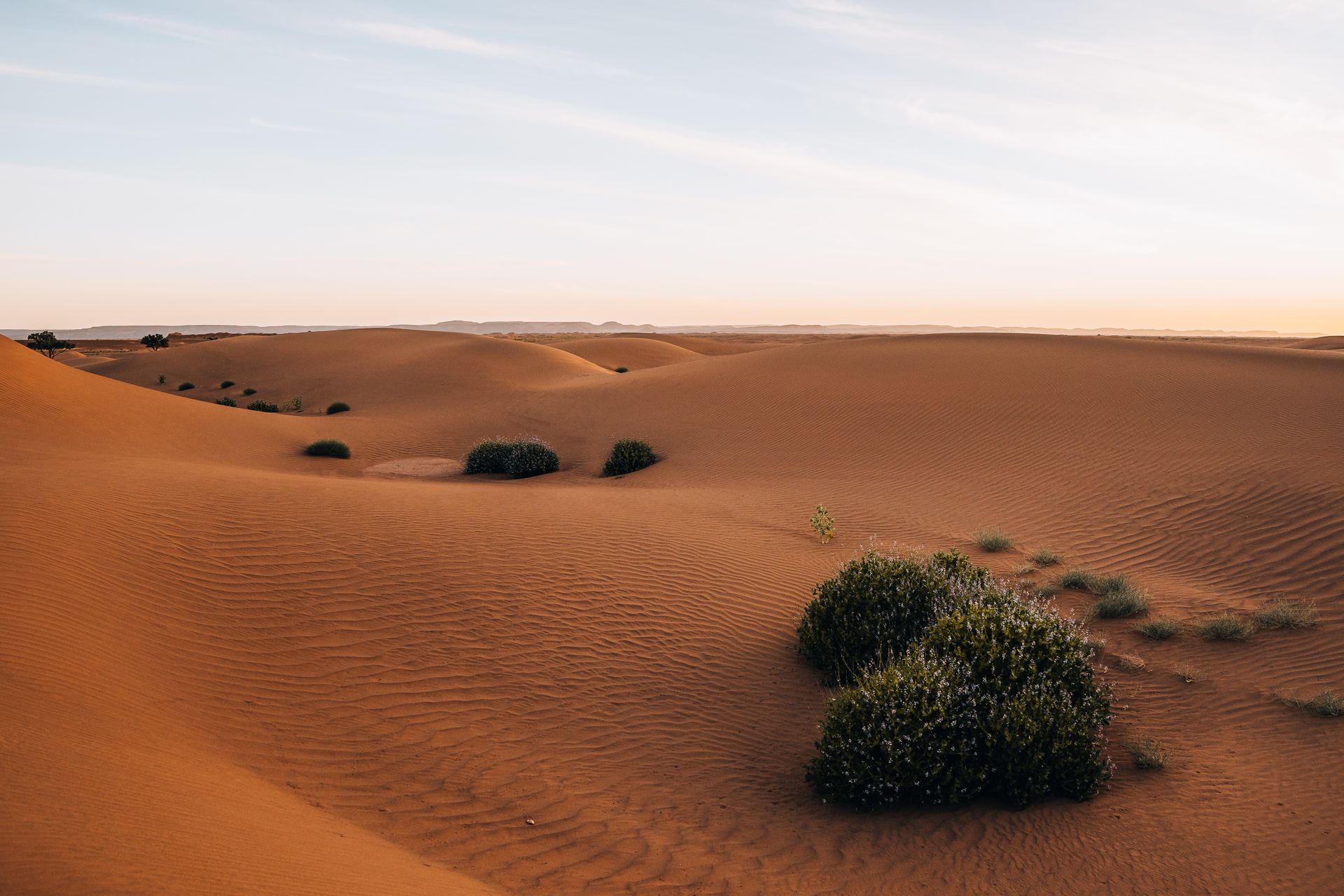
Morocco desert tours from Marrakech
Private Sahara journeys from Marrakech — camel treks at golden hour, nights in Berber camps, and routes through the High Atlas, the kasbahs and the dunes of Erg Chebbi or Erg Chigaga. Choose 3 to 8 days, private or shared, standard or luxury.
Reviewed by Aziz Karaoui, Co-Founder & Morocco Travel Expert at Desert Morocco Tour · Updated September 16, 2026
Which Marrakech Desert Tour Is Right for You?
There's no universally "best" length — it depends on how much time you have and how much driving you're comfortable with. Here's how the routes actually compare.
| Length | Best Suited For | Desert Nights | Pace |
|---|---|---|---|
| 3 days | Limited time, want a genuine Sahara night | 1, Erg Chebbi | Fast — two long driving days |
| 4 days | A bit more breathing room, same core route | 1, Erg Chebbi | Active, with a slower descent through the Draa Valley |
| 5 days | Want Zagora and a second desert night | 2, Erg Chigaga area | Comfortable — a full day free in the dunes |
| 6 days | Want Todra Gorge and Berber villages too | 1-2, Erg Chebbi | Relaxed, more stops per day |
| 7-8 days | Want to extend to Fes or add the Atlantic coast | 1-2 | Most flexible, shortest average drive per day |
Every route crosses the High Atlas and stops at Ait Ben Haddou — the difference is how much time you get everywhere else, and whether you finish in Marrakech or continue to Fes (see below).
Sahara itineraries, 3 to 8 days
Every route departs from Marrakech, crosses the High Atlas and the kasbah valleys, and ends with a night — or several — sleeping among the dunes. The 3, 4 and 7-day routes finish in Fes rather than backtrack; the 5, 6 and 8-day routes return to Marrakech. The longer routes extend toward Fes or join our full Morocco Grand Tour circuit for travellers with more time. Every itinerary here can also be arranged at a slower, more indulgent pace as one of our luxury desert tours.
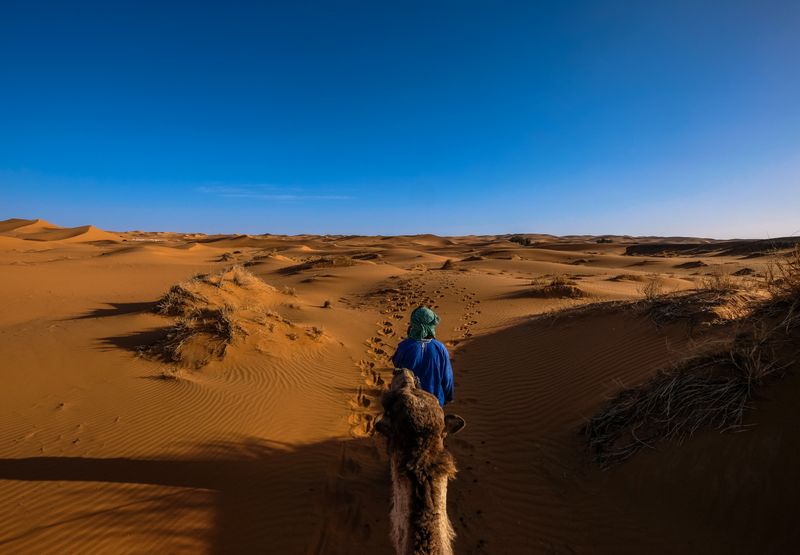
3 Days desert tour from Marrakech to Fez
- Crossing of the High Atlas via Tizi n'Tichka pass, with stops over the Ounila Valley
- Afternoon in the Dades Gorges before continuing toward the dunes
- Camel trek into Erg Chebbi at sunset and one night in a desert camp
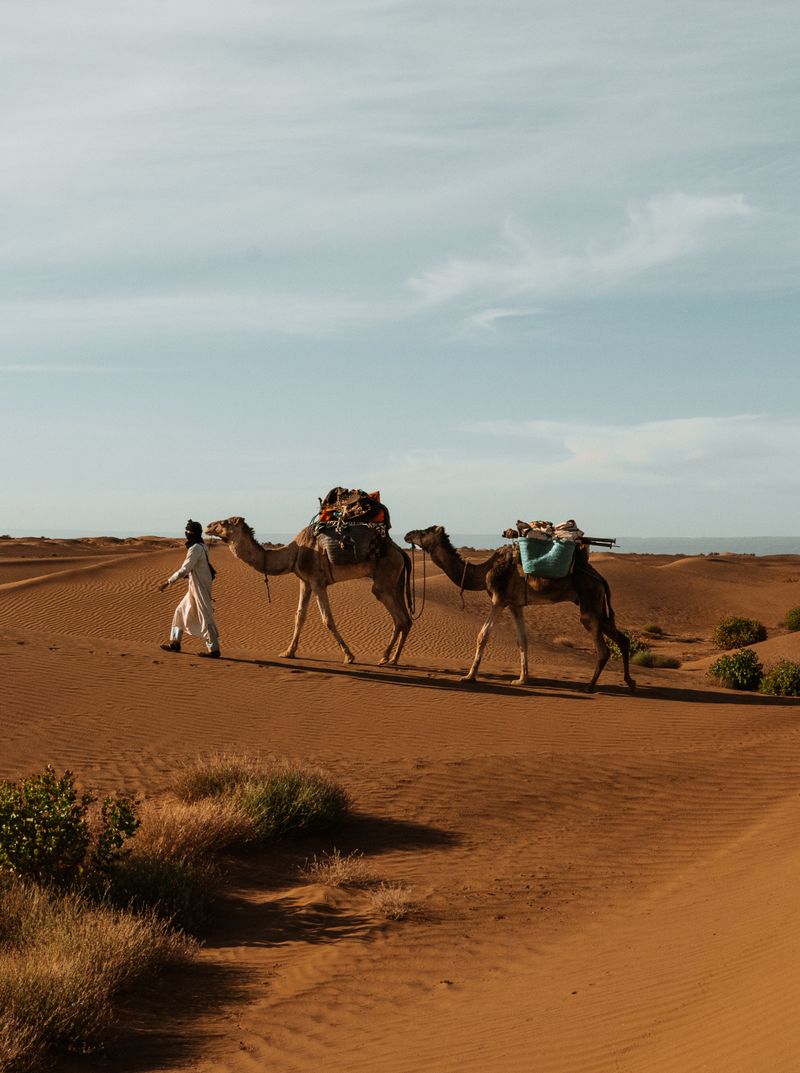
4 Days desert tour from Marrakech to Fez
- Visit to the Ait Ben Haddou ksar, a fortified earthen village on the old caravan routes
- A slower descent through the Draa Valley's palm groves toward the desert gate
- An unhurried night in camp with time to walk the dunes at dawn
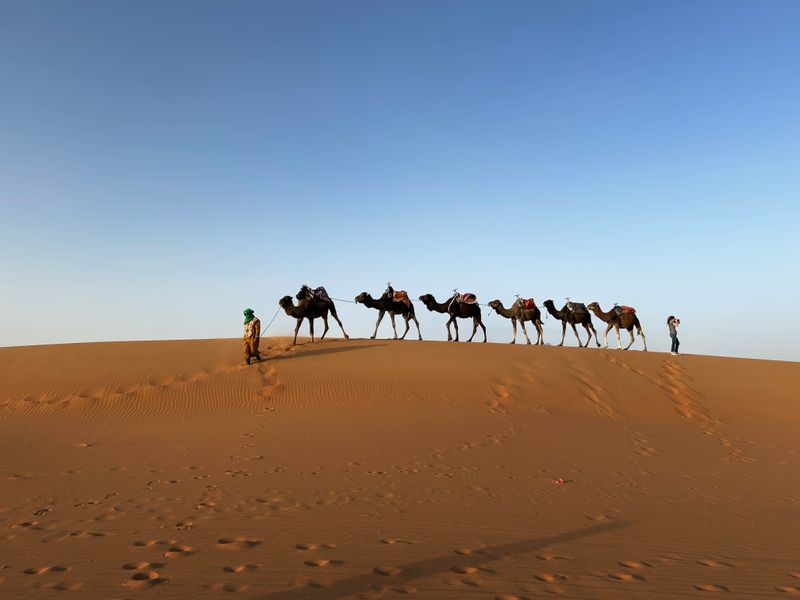
5 Days desert tour from Marrakech to Merzouga
- An added detour toward Zagora, once the starting point of the old Timbuktu caravans
- Time on tracks used by nomadic families, away from the main southern road
- Two nights under canvas, with a full day free to rest among the dunes
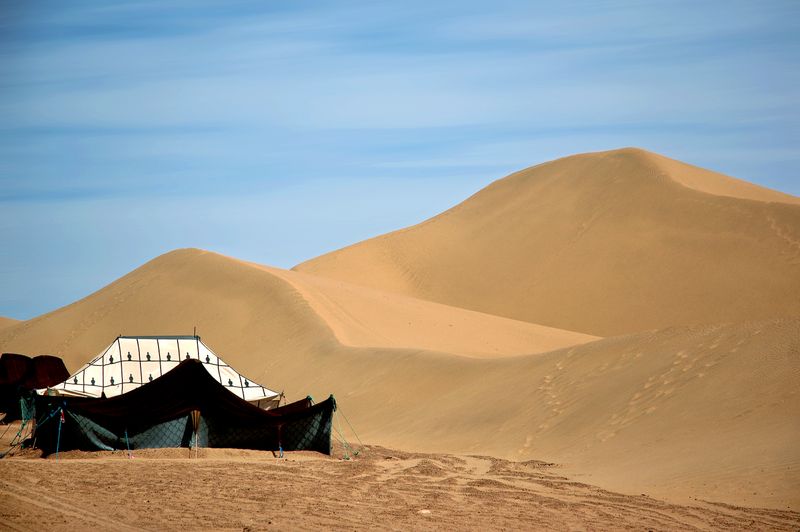
6 Days desert tour from Marrakech to Merzouga
- A stop in the palm oasis of Skoura, among some of the region's oldest kasbahs
- A walk through the narrow rose-coloured walls of the Todra Gorge
- Visits to Berber villages along the route, with time for tea with local families
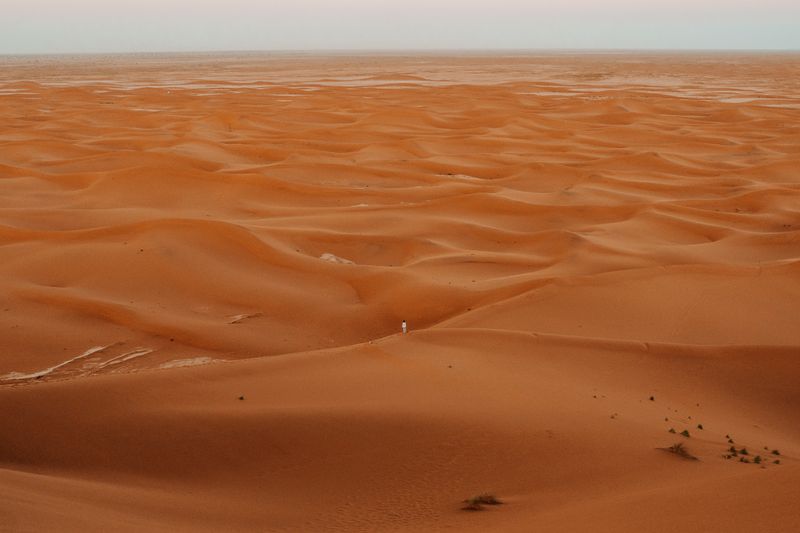
Southern Morocco Odyssey
- An extension north through the cedar forests of the Middle Atlas
- Arrival in Fes, with its medina and centuries-old craft quarters, or a loop back to Marrakech
- More flexibility each day, with shorter drives and longer stops
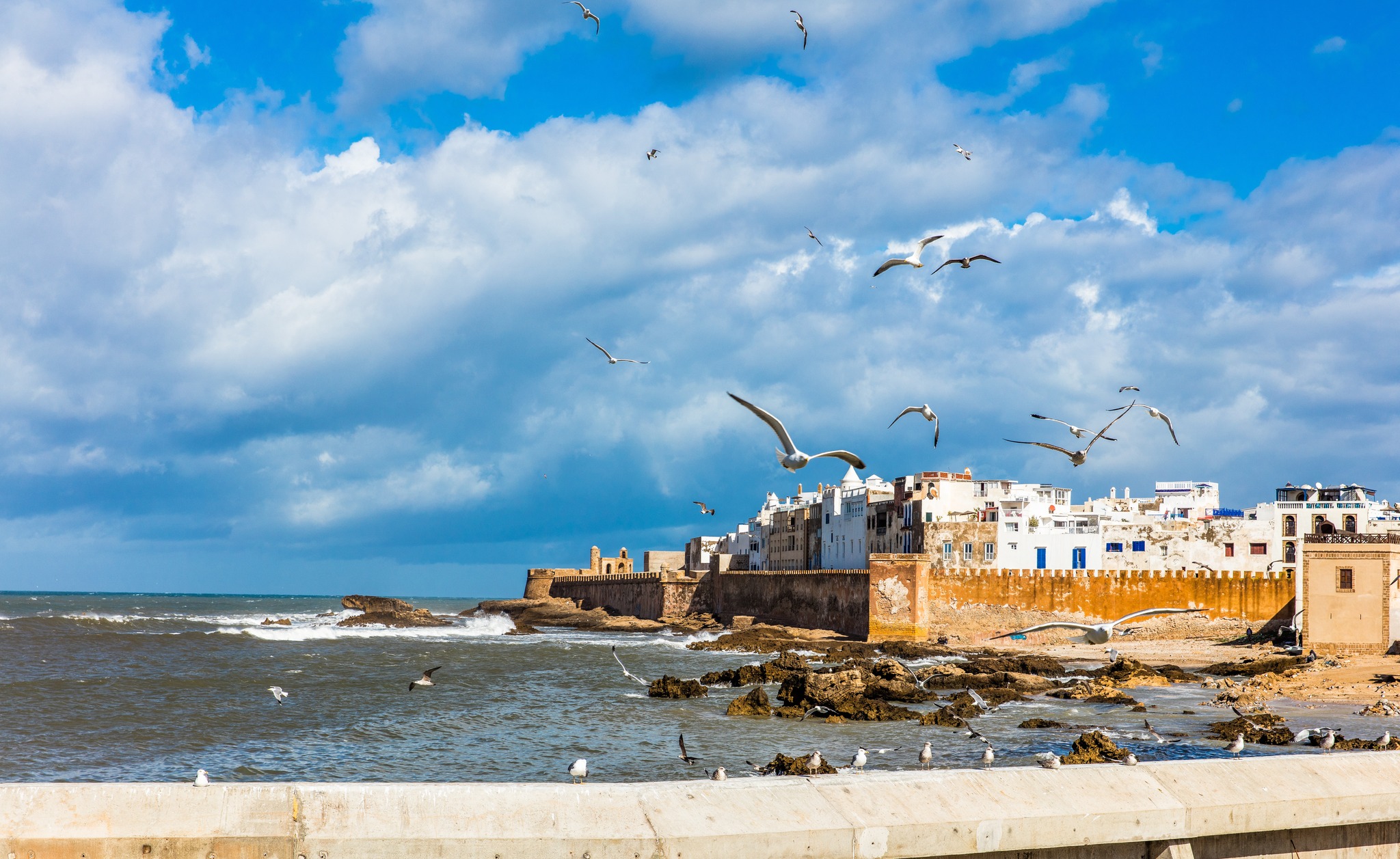
8 Days Marrakech, Desert & Atlantic Coast
- The complete southern circuit: Atlas, kasbah valleys, Draa, Erg Chebbi and the Middle Atlas
- A private guide and driver throughout, with the itinerary adjusted to your pace
- The most immersive option, built for travellers who want to linger, not rush
Erg Chebbi or Erg Chigaga?
Not every "Sahara tour" visits the same dunes. Here's the factual difference.
Erg Chebbi (Merzouga)
Morocco's tallest and most accessible dune field, reached via the Dades and Todra route. This is where our 3, 4, 6 and 8-day tours sleep. Choose this if your time is limited or you want the most straightforward route.
Erg Chigaga (near Zagora)
A more remote dune field reached via the Draa Valley and a 4x4 crossing of stony hammada terrain, with far fewer visitors. Our 5-day route includes this detour. Choose this if you have 5+ days and want a quieter, more off-the-beaten-path desert stay.
Is Agafay the Sahara Desert?
No. Agafay is a rocky, arid landscape about 30-45 minutes from Marrakech — useful for a quick sunset dinner or a taste of desert atmosphere, but it has no sand dunes. If you're specifically after the Sahara dune experience — golden sand, camel trek, a camp at Erg Chebbi or Erg Chigaga — you need one of the multi-day routes above. For a short Agafay evening instead, see our Agafay Desert Experience.
Private vs. Shared Desert Tours
| Private | Shared | |
|---|---|---|
| Vehicle | Your party only | Small group of other travelers |
| Schedule | Can flex around your dates and pace | Fixed departure and itinerary |
| Stops | Adjustable with your driver-guide | Fixed for the whole group |
| Camp & route | Same routes and camp partners | Same routes and camp partners |
| Cost | Generally higher per person | Generally lower, shared costs |
Both follow the same itineraries and desert camps — the difference is entirely about pace, flexibility, and who else is in the vehicle. Mention your preference when you enquire.
What Makes a Desert Tour "Luxury" — and Can I Skip the Camel?
Luxury, defined
The route and stops don't change — what changes is comfort and privacy: a private vehicle and driver throughout, boutique or upgraded accommodation off the desert route, and a luxury camp with en-suite tents and private terraces rather than shared facilities. See our luxury desert tours for the upgraded version of any route above.
Camel-free option
No, riding is never mandatory. The camel trek into the dunes is part of the standard itinerary, but a 4x4 transfer to the same camp can be arranged instead — just mention this when you request your quote, and it will be built into your specific itinerary.
How Much Does It Cost, and How Do I Book?
There's no single fixed price, because cost depends on group size, number of days, travel dates, accommodation category and desert camp level (standard or luxury). Here's how booking works:
- Send us your travel dates and roughly how many days you have
- Tell us your group size and whether you'd prefer private or shared
- Choose Erg Chebbi (Merzouga) or Erg Chigaga, and standard or luxury camp
- We confirm availability and send a personalized quote — nothing is booked until you confirm
Planning a desert tour from Marrakech
Marrakech is the natural starting point for a Sahara journey — closer to the dunes than Fes or Casablanca, and directly connected to the southern route through the High Atlas that every one of our itineraries follows. From the Red City, the road climbs the Tizi n'Tichka pass before dropping into the kasbah valleys and, eventually, the sand itself. Most travellers reach Erg Chebbi, the tallest and most accessible dune field in Morocco, though our longer routes also brush the quieter, more remote Erg Chigaga near Zagora for those who want to go further off the beaten track.
How much driving is actually involved?
Marrakech to Merzouga is a full day's drive on its own — this is why the 3-day route feels fast, with two long driving days either side of one desert night. Adding days doesn't reduce the total distance, but it spreads it out: a 5 or 6-day route breaks the same drive into shorter stages with more stops, rather than a different, shorter road. Traffic, weather and road conditions can all affect exact timing, so we don't promise precise hours — but as a rule, expect a full day of driving on the way out and a full day back, with the middle days built around gorges, valleys and the desert itself.
Beyond the dunes: pairing a desert tour with other experiences
A Sahara trip doesn't have to be the only thing on your Marrakech itinerary. Many of our guests combine a shorter desert route with a day or two in the city itself — a guided walk through the medina on a Marrakech private tour, an evening in the rocky Agafay Desert for those short on time, or a full day of tastings on our Marrakech food tour. Couples travelling for an anniversary or honeymoon often ask about our dedicated honeymoon itineraries, which follow a similar southern route with more privacy and upgraded camps, while travellers bringing children usually lean toward our family tour pacing instead — the longer routes (5-6 days) tend to suit families better than the fast 3-day version, simply because of the shorter driving stretches per day. Photographers, meanwhile, often ask whether a guide can help with composition and timing in the dunes — our Morocco photography tours are built specifically around sunrise and sunset light in the Sahara.
What the Sahara actually looks like, season by season
The Sahara isn't one uniform landscape — the dunes around Merzouga are famously golden and tall, some reaching over 150 metres, while the flatter Erg Chigaga near Zagora feels more remote and gets far fewer visitors. Between October and April, days are warm and comfortable for walking or riding, while nights drop enough for blankets and a fire; from May onward, daytime heat builds quickly, and by midsummer the desert stretches of the route are best experienced in the early morning and evening rather than at midday.
Sources & further reading
Ait Ben Haddou, visited on every route above, is described by UNESCO as "a striking example of the architecture of southern Morocco" and inscribed as a World Heritage Site for its earthen ksar architecture. Erg Chigaga is described in general reference sources as one of Morocco's largest and most remote dune fields, reached only by unpaved track from Zagora or M'Hamid.
Questions we're asked most
How many days do you need for a desert tour from Marrakech?
Three days is the minimum practical duration to reach Erg Chebbi, spend one night in the dunes, and return — most of that time is spent driving. Four to six days add a second desert night, the Todra Gorge, Skoura or a detour to Zagora, without turning every day into a transfer.
Is a 3-day Marrakech desert tour worth it?
Yes, if your time is limited — it's a genuine Sahara night with a camel trek and a desert camp, reached via the High Atlas and Ait Ben Haddou. The trade-off is two long driving days; if you have a spare day or two, a 4 or 5-day version gives noticeably more breathing room.
Is Agafay the Sahara Desert?
No. Agafay is a rocky, arid landscape about 30-45 minutes from Marrakech, useful for a sunset dinner or a quick desert-style evening, but it has no sand dunes. The genuine Sahara dune experience — Erg Chebbi near Merzouga, or the more remote Erg Chigaga — requires the multi-day journeys above.
What is the difference between Erg Chebbi and Erg Chigaga?
Erg Chebbi, near Merzouga, is Morocco's tallest and most accessible dune field, reachable by our 3-day route. Erg Chigaga, near Zagora, sits further south, needs a 4x4 crossing and a longer minimum trip, and sees far fewer visitors — a trade of convenience for remoteness.
Should I choose Merzouga or Erg Chigaga?
Choose Merzouga (Erg Chebbi) if your time is limited or this is a 3-4 day trip — it's the more accessible dune field. Choose Erg Chigaga if you have 5+ days and want a quieter, more remote desert experience with fewer other travelers around.
Are these tours private or shared?
We offer both. A private tour means your own vehicle, driver-guide and a flexible schedule; a shared tour follows the same route and camp partners with a small group, generally at a lower cost. Mention your preference when you enquire.
Do I have to ride a camel?
No. The camel trek into the dunes is part of the standard itinerary, but a 4x4 transfer to the same camp can be arranged instead if you'd prefer not to ride — just mention it when you request your quote.
Does the tour cross the High Atlas and visit Ait Ben Haddou?
Yes, every route on this page crosses the High Atlas via the Tizi n'Tichka pass and stops at Ait Ben Haddou, a UNESCO World Heritage ksar on the old caravan route between the Sahara and Marrakech.
Can a Marrakech desert tour finish in Fes instead of returning to Marrakech?
Yes — our 3, 4 and 7-day routes are built to end in Fes rather than backtrack, continuing north through the Middle Atlas after the desert. Our 5, 6 and 8-day routes return to Marrakech. Check each itinerary's start/finish before booking.
What is included in a luxury desert tour?
A private vehicle and driver throughout, boutique or upgraded accommodation off the desert route, and a luxury camp with en-suite tents rather than shared facilities. The route and stops are the same as our standard tours — luxury here means comfort and privacy, not a different itinerary.
How much does a private desert tour from Marrakech cost?
Cost depends on group size, number of days, travel dates, accommodation category and desert camp level, so we provide a personalized quotation rather than a fixed listed price for any of these routes.
When is the best time to visit the Sahara from Marrakech?
The desert is at its most comfortable from October through April, when daytime temperatures are warm rather than punishing and the nights, though cold, are ideal for stargazing wrapped in blankets around a fire. July and August bring intense heat across the southern routes, particularly through the Draa Valley, though early morning and evening activities remain pleasant.
What's the difference between a standard and a luxury desert camp?
A standard camp offers shared or private canvas tents with proper beds, shared washing facilities, and a communal dinner around the fire — comfortable, sociable, and true to the traditional Berber camp experience. A luxury camp adds ensuite bathrooms inside each tent, private terraces facing the dunes, a la carte dining, and often a separate lounge tent for tea and music in the evening.
Is the camel trek suitable for children, older travellers, or first-timers?
Yes — the trek into Erg Chebbi is gentle, led at walking pace by an experienced handler, and typically lasts around forty-five minutes to an hour each way. Most camps welcome children from around six years old, and travellers with limited mobility can usually arrange a 4x4 transfer instead, without missing any part of the desert stay.
What should I pack for a multi-day desert trip?
Layers are the key rule: a light breathable top for the day, a warm fleece or jacket for the night, and a scarf or shesh that doubles as sun protection and windbreak on the dunes. Closed shoes suit the drive days and gorge walks, a headlamp, portable charger and reusable water bottle round out the essentials, and a small daypack is more useful than a large suitcase.
Do you offer pickup from riads or hotels in Marrakech, and airport transfers?
Every itinerary includes pickup directly from your riad or hotel in the Marrakech medina or Gueliz, and the same vehicle brings you back at the end of the tour. Airport transfers on arrival or departure day can be arranged alongside your tour booking, so the whole trip is covered door to door.
How do I request a quote or book a tour?
Message us on WhatsApp or email with your travel dates, group size and preferred number of days. We'll recommend a route, confirm availability for your camp and vehicle, and send a personalized quote before anything is booked.
Tell us your dates, we'll shape the route.
Send us your travel dates and the number of days you have — we'll recommend the right itinerary and confirm availability for your camp and vehicle.