
7-Day Morocco Photography Tour: Sahara & Nomad Life
From the medinas of Marrakech to the dunes of Erg Chigaga, a private route built around light — with two full nights in the desert for sunrise, sunset and a visit with a nomad family.
Reviewed by Aziz Karaoui, Co-Founder & Morocco Travel Expert at Desert Morocco Tour · Updated September 13, 2026
Moments, Light and Life in the Desert
This 7-day route from Marrakech is built for travelers who want to see Morocco through a viewfinder, not just a car window. The journey crosses the High Atlas toward ancient kasbahs, palm-filled valleys and Berber villages, with every stop chosen for how it looks in the light — colourful markets, historic architecture, dramatic landscapes and unposed daily life. Sunrise and sunset are treated as fixed points on the itinerary, timed around favorable photographic light where conditions permit, not afterthoughts.
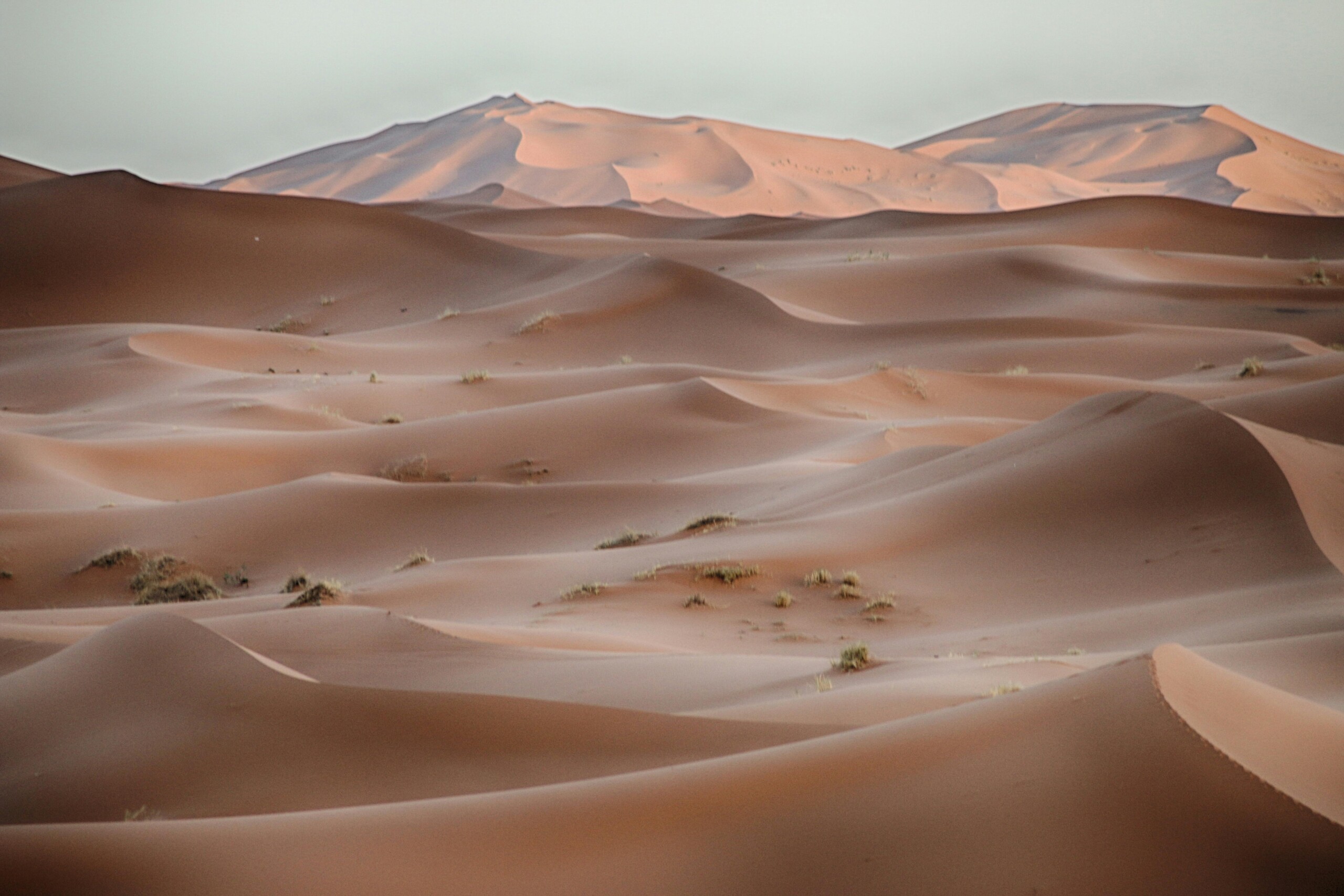
The heart of the trip is the remote Erg Chigaga dunes, where two nights leave real time to photograph golden light, dune shapes, camel caravans and the night sky, alongside a visit with a nomad family to photograph genuine daily life, with consent, rather than staged scenes. With private transport, comfortable accommodation and local guidance throughout, it's a route designed to come home with images worth keeping.
A Morocco Photography Tour Built Around the Light
A standard Morocco tour is scheduled around hotel check-in times and attraction opening hours. This one is scheduled around sunrise, golden hour, sunset and blue hour instead — the moments that actually make a photograph. That means arriving at Ait Ben Haddou when the light rakes across the mud-brick walls, and reaching Erg Chigaga in time for sunset rather than after dark. We can't promise perfect light or clear skies on any given day, but the itinerary is designed to give you the best chance.
Jump to a day
Request Your Private Photography Tour Quote
Tell us your travel dates, number of travelers, preferred accommodation level and any photography interests. We'll prepare a personalized quotation for your private photography journey.
How Does the Photography Route Unfold?
Every night's accommodation is confirmed in advance — this is a guide to how the light and locations unfold each day.
Arrival in Marrakech — Medina Photography Walk
The journey begins in Marrakech. After settling into your riad, a relaxed walk through the old medina is the ideal warm-up — the souks, spice stalls and artisan workshops give plenty to work with before the light turns golden. As the sun drops, the route leads toward Jemaa el-Fna, where performers and food stalls create a lively scene, and the rooftop cafés around the square offer good angles for sunset and blue-hour shots.
- Photography walk through the Marrakech medina and souks
- Golden hour and blue hour at Jemaa el-Fna
- Overnight: riad, Marrakech
Marrakech — High Atlas — Ait Ben Haddou — Agdz
The road climbs across the High Atlas via the Tizi n'Tichka pass, with Berber villages and wide viewpoints along the way. From there, the ksar of Ait Ben Haddou comes into view — a UNESCO-listed kasbah of mud-brick walls and towers, with plenty of angles worth exploring on foot.
In the afternoon, the route follows the palm-lined Draa Valley toward Agdz, with stops at traditional ksour, ending the day photographing sunset over the palm groves before a night in a guesthouse.
Ait Ben Haddou is called "a striking example of the architecture of southern Morocco" by UNESCO World Heritage
- Crossing of the High Atlas via the Tizi n'Tichka pass
- Photography stop at Ait Ben Haddou
- Sunset over the Draa Valley palm groves
- Overnight: guesthouse, Agdz
Agdz — Zagora — Tamegroute — M'hamid — Erg Chigaga
The scenery turns increasingly desert-like on the way to Zagora, with a stop in Tamegroute for its green-glazed pottery and old library — good ground for detail and craft photography, always with the permission of the artisans at work. From M'hamid, the tarmac ends and a 4x4 takes over for the off-road run to Erg Chigaga, crossing stony hammada before the dunes rise into view. Arrival is timed for sunset — the first proper session in the desert, with long shadows and soft golden tone.
- Stop in Tamegroute for pottery and craft photography
- Off-road 4x4 crossing to Erg Chigaga
- First desert sunset session
- Overnight: desert camp, Erg Chigaga (night 1 of 2)
Erg Chigaga — Nomad Life Photography & Desert Exploration
The full day is given over to the dunes and to nomadic life. A sunrise session comes first, when the low light brings out texture and contrast in the sand, followed by a camel ride (a 4x4 alternative is available if you'd prefer not to ride) for a different angle on silhouettes and footprints. A visit to a nomad family living in traditional tents follows — tea, herding, and daily routines, approached as a human visit first and a photo opportunity second, with portraits taken by consent rather than assumed.
In the afternoon, the quieter dunes around Iriki offer more minimal, wide-open compositions, before the day closes with sunset and a night given to photography under a clear desert sky, conditions permitting.
- Sunrise session on the dunes
- Camel ride (or 4x4 alternative) and nomad family visit
- Sunset and night photography
- Overnight: desert camp, Erg Chigaga (night 2 of 2)
Erg Chigaga — Lake Iriki — Foum Zguid — Taznakht — Ouarzazate
One last sunrise session in the Sahara, then the drive continues across Lake Iriki and rocky desert toward Foum Zguid — stark, wide landscapes well suited to images of isolation and scale. A stop in Taznakht, known for its handmade carpets, gives a chance to photograph texture and artisan work up close, with the weavers' permission. The day ends in Ouarzazate, Morocco's film capital, with the option to photograph the exterior of Taourirt Kasbah before resting for the night.
- Final desert sunrise near Erg Chigaga
- Lake Iriki and the desert route to Foum Zguid
- Carpet weaving stop in Taznakht
- Overnight: hotel, Ouarzazate
Ouarzazate — Telouet — High Atlas — Marrakech
The return route runs through the Ounila Valley, one of Morocco's more photogenic corners, with a stop at Telouet Kasbah — once home to the Glaoui family, and rich in zellij tile work and carved plaster, ideal for interior and architectural shots. From there, the High Atlas offers a last set of mountain and village views before arrival in Marrakech, with the evening left free for any remaining images — alleys, doorways, illuminated riads.
- Ounila Valley and Telouet Kasbah
- Return crossing of the High Atlas
- Free evening in Marrakech
- Overnight: riad, Marrakech
Marrakech — Free Time & Departure
The last morning is yours, shaped around your flight. The Majorelle Garden is a good option for colour and botanical shots (entrance ticket not included, advance booking required), or the quieter parts of the medina for doors, hidden streets and daily life. When it's time, a private transfer takes you to Marrakech Airport.
- Free morning — Majorelle Garden or the medina
- Private transfer to Marrakech Airport
- End of services
Why Erg Chigaga, and Why Two Sahara Nights?
Why Erg Chigaga. Reaching it means leaving the tarmac at M'hamid for a genuine off-road 4x4 crossing, rather than a short paved drive. That remoteness means fewer camps and fewer other visitors — useful for wide, uncluttered compositions. It isn't objectively better than the more accessible Erg Chebbi dunes further north, just a different character suited to a photography-focused pace.
Why two nights, not one. A single desert night usually means: arrive, sunset, sleep, sunrise, leave. Two nights leave room for a full day in between — a second sunset, a full night for photography, a second sunrise, and unhurried time with the nomad family rather than a rushed stop.
Photographing Nomadic Life With Respect
The nomad family visit is a human encounter first and a photography opportunity second. Ask before close portraits, respect a refusal without pressing, and let your guide help navigate what's appropriate — some moments are for looking, not photographing. The same courtesy applies throughout the trip: at Tamegroute and Taznakht, artisans are working, not performing, so ask before photographing them closely, and be mindful around religious sites and children. None of this is staged for the camera, and it shouldn't be treated as though it were.
Is This a Photography Tour or a Photography Workshop?
This is a photography-focused private tour, not a formal workshop. Your driver-guide handles locations, timing around light, and access — including the off-road route to Erg Chigaga — and photography guidance is available if you want it.
What it doesn't include, unless arranged separately: structured technical instruction, portfolio review, or editing sessions. If you're looking for formal tuition alongside the trip, mention it when requesting your quote so we can discuss what's realistic.
Camera Gear & Protecting It in the Desert
A wide-angle lens covers the dunes and kasbah architecture, a short telephoto suits portraits and details, and a sturdy tripod helps for sunrise, sunset and night photography. Spare batteries are worth having, since cold desert nights drain them faster. Expensive equipment isn't necessary — smartphone photographers are just as welcome on this route. For protection, keep gear in a sealed bag when not shooting, avoid changing lenses in windy conditions, and wipe down equipment each evening.
What Makes a Private Photography Journey Premium?
For a photographer, premium isn't primarily about the hotel category — it's time to wait for light, privacy from a group schedule, and the flexibility to stop when conditions get interesting rather than when the itinerary says so.
The off-road access to Erg Chigaga, the two desert nights, and a driver-guide who handles logistics so you can focus on composition are the tangible parts of that.
- Time — two Sahara nights instead of one rushed overnight
- Privacy — no group schedule dictating when you shoot
- Access — genuine 4x4 off-road route to Erg Chigaga
- Flexibility — stops for light and composition made as needed
- Comfort — quality accommodation between shoots
- Logistics — your driver-guide handles transport throughout
Accommodation
The Route
Riads in Marrakech, a guesthouse in Agdz, two nights at a desert camp in Erg Chigaga, and a hotel in Ouarzazate. Exact properties depend on availability, your travel dates and preferred category.
Upgrades
If you'd like to upgrade specific nights to a higher accommodation category, mention it when requesting your quote.
What's Included & What's Not
Included
- Private air-conditioned 4WD or minivan
- Professional English-speaking driver-guide
- Daily hotel pickup and drop-off, with luggage service
- 6 nights' accommodation in riads and a desert camp
- 2 nights at a desert camp at Erg Chigaga
- Sunrise and sunset photography sessions at the dunes and scenic stops
- Off-road 4x4 exploration to Erg Chigaga and Lake Iriki
- Entrance fees for the sites specifically listed in this itinerary's confirmed inclusions
- Camel trek in the Sahara Desert (4x4 alternative available)
- Nomad family visit for daily-life photography, with consent
Not Included
- International flights
- Travel insurance
- Tipping
- Lunches
- Personal expenses
- Majorelle Garden ticket (pre-booked online separately)
- Formal photography instruction or editing sessions
How Much Does a Morocco Photography Tour Cost?
There's no single fixed price published for this route, because cost depends on group size, travel dates, accommodation category and vehicle. Request a quote with your dates and group size, and you'll receive a full breakdown to compare against other operators.
Where Do This Page's Facts Come From?
- UNESCO — Ksar of Ait-Ben-Haddou — official World Heritage listing.
Frequently Asked Questions
Do I need to be a professional photographer for this tour?
No. The itinerary is built around good light and strong locations, with guidance available for anyone who wants it — beginners and experienced photographers travel this route equally comfortably. Smartphone photographers are just as welcome.
Is this a photography tour or a photography workshop?
It's a photography-focused private tour, not a formal workshop. Your driver-guide provides locations, timing around light, and local access, but this trip doesn't include structured technical instruction, portfolio review, or editing sessions unless arranged separately.
How many nights are spent in the desert?
Two nights at a desert camp in the Erg Chigaga dunes, giving a full day dedicated to sunrise, sunset and night photography, plus a nomad family visit, rather than a single rushed overnight.
Why Erg Chigaga instead of Erg Chebbi?
Erg Chigaga is reached by a genuine off-road 4x4 crossing rather than a paved road, which means fewer camps and a more remote feel — useful for wide, uncluttered compositions. It's not better or worse than Erg Chebbi, just a different character suited to this itinerary's pace.
Is this a private tour?
Yes, private throughout, with your own driver-guide and vehicle, so stops for light and composition can be made whenever they're needed.
Can I photograph the nomad family?
Yes, with the same courtesy you'd extend anywhere else — your guide helps facilitate the visit, but photographs are taken with consent, not assumed. This is a human visit first and a photo opportunity second.
Can I photograph the stars in the Sahara?
Night photography is possible on the second desert night, and the dark skies away from light pollution help, but conditions depend on the moon phase and cloud cover on your specific dates, so clear astrophotography results can't be guaranteed.
What should I pack for photography in the Sahara?
A wide-angle lens for the dunes and kasbah architecture, a short telephoto for portraits, and a sturdy tripod for sunrise, sunset and night photography. Spare batteries and a dust-protective bag for your gear are worth bringing given the desert conditions.
How do I protect my camera from desert sand?
Keep gear in a sealed bag when not shooting, avoid changing lenses in windy conditions, and wipe down equipment each evening. A simple rain cover or dry bag works well as dust protection.
Is Ait Ben Haddou good for photography?
Yes — its mud-brick walls and towers offer strong texture and geometry, especially in the low light of morning or late afternoon, and it's a UNESCO World Heritage site.
Does the tour include Lake Iriki?
Yes, on Day 5, offering wide, minimal desert landscapes as the scenery shifts from dunes to rocky terrain.
Is a camel ride required?
The camel trek is part of the standard itinerary, but a 4x4 transfer can be arranged instead if you'd prefer not to ride.
Are entrance fees included?
Entrance fees are included for the sites specifically listed in this itinerary's confirmed inclusions.
Can non-photographers join?
Yes — this is a private tour, so a partner who isn't especially interested in photography can simply enjoy the route, the desert camp and the nomad visit alongside you.
How much does this photography tour cost?
Cost depends on group size, travel dates and accommodation category, so we provide a personalized quotation rather than a fixed listed price.
How do I get a price for this tour?
Pricing depends on your travel dates, group size and choice of accommodation category, so share your details through the form above or over WhatsApp and you'll receive a tailored quote.
Related Journeys
Start Planning Your Morocco Photography Journey.
Send your dates and questions about the route, the cities, or the desert camp, and we'll help you plan a private photography journey worth the trip.