
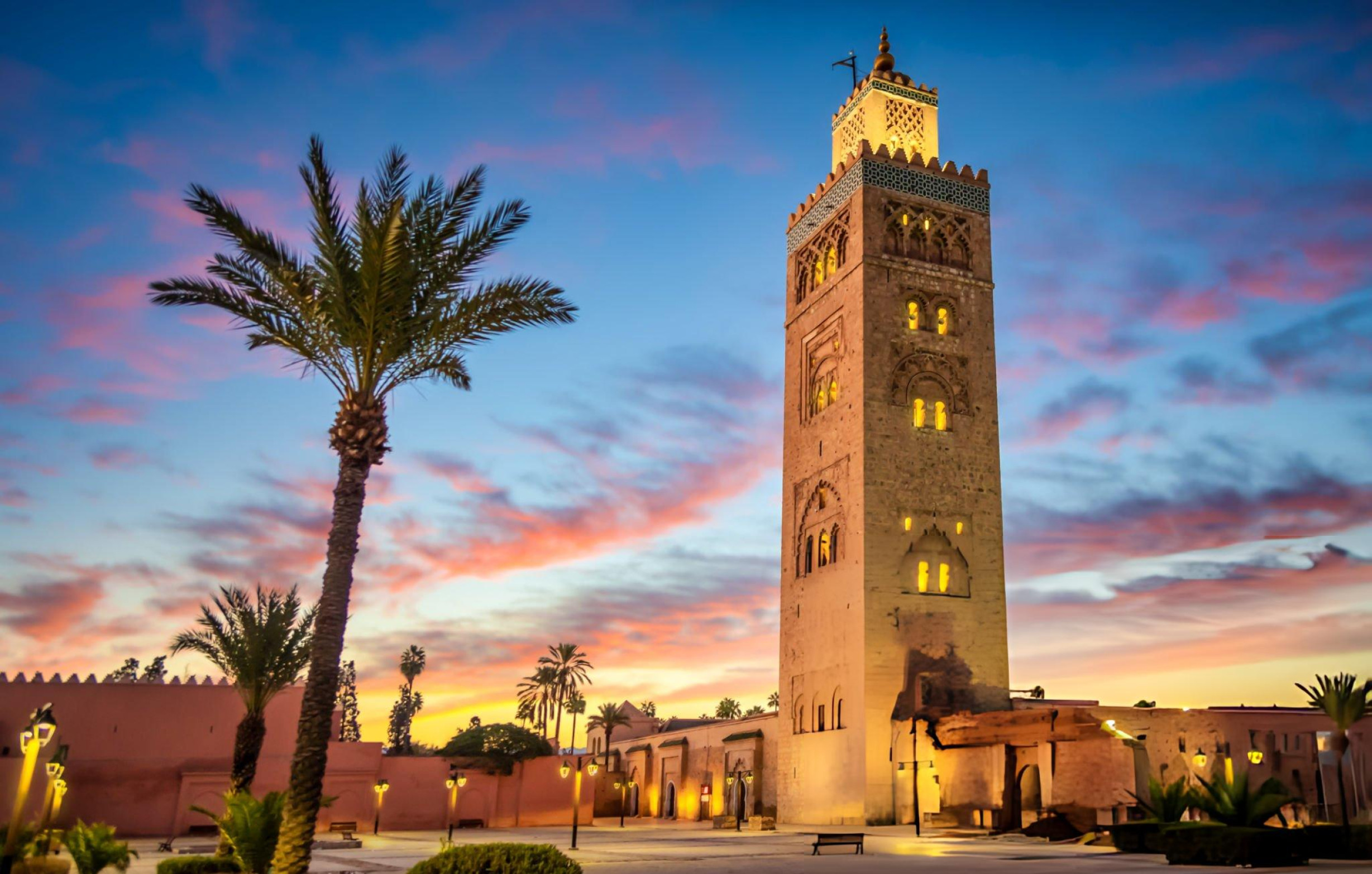
12-Day Morocco Grand Tour from Marrakech
A complete loop through the very soul of Morocco — from the Red City's medina to the silence of the Sahara, the imperial cities, and the blue lanes of Chefchaouen.
By Aziz Karaoui, Co-Founder & Morocco Travel Expert at Desert Morocco Tour · Updated September 13, 2026
What Makes This 12-Day Morocco Tour Different?
This 12-day route is built for travelers who want more than a checklist of sights — the chaotic energy of Marrakech's medina, the profound quiet of the Sahara, and everything in between, given proper time rather than rushed between stops. It runs as a full circuit from Marrakech: south over the High Atlas to Ait Ben Haddou and Ouarzazate, through the Dades and Todra gorges into two full nights in the Merzouga dunes, then north through the cedar forests to Fes, Meknes and the Roman ruins of Volubilis, on to Chefchaouen's blue lanes, and back down the coast through Rabat and Casablanca before returning to Marrakech.
Along the way there's a full guided day in both Marrakech and Fes, a camel trek and two nights under canvas in Erg Chebbi, an evening of Gnawa music in Khamlia, and a private, air-conditioned vehicle with an English-speaking driver-guide throughout — enough structure to see everything worth seeing, with enough flexibility to actually enjoy it.
Jump to a day
Request your personalised quote
Share your travel dates, group size and accommodation preference, and you'll receive a tailored price for this 12-day route — or a shorter or longer version of the same journey.
How Does the 12-Day Itinerary Unfold?
Every night's accommodation is confirmed in advance — this is a guide to how the days unfold, not a loose outline.
Arrival in Marrakech
You're met at Marrakech Menara Airport and driven straight to your riad or hotel in the medina. The rest of the day is free — a good moment for a first unhurried walk through the nearby streets before the guided city tour tomorrow. Overnight in a riad, Marrakech.
- Private airport pickup in Marrakech
- Transfer to your riad in the medina
- Free afternoon and evening
- Overnight: riad, Marrakech
Guided Day in Marrakech
A local guide leads the way through the Red City's landmarks: the Saadian Tombs, the ruined grandeur of El Badi Palace, the Ben Youssef Madrasa, and the exterior of the Koutoubia Mosque, before diving into the constant motion of Jemaa el-Fna square. The afternoon is left free for the Majorelle Garden, best visited at your own pace. Overnight in a riad, Marrakech.
Marrakech's central square is described as "a veritable open-air theatre" by UNESCO World Heritage
- Guided visit to the Saadian Tombs and El Badi Palace
- Ben Youssef Madrasa and Jemaa el-Fna square
- Free afternoon at the Majorelle Garden
- Overnight: riad, Marrakech
Marrakech — High Atlas — Telouet — Ait Ben Haddou — Ouarzazate
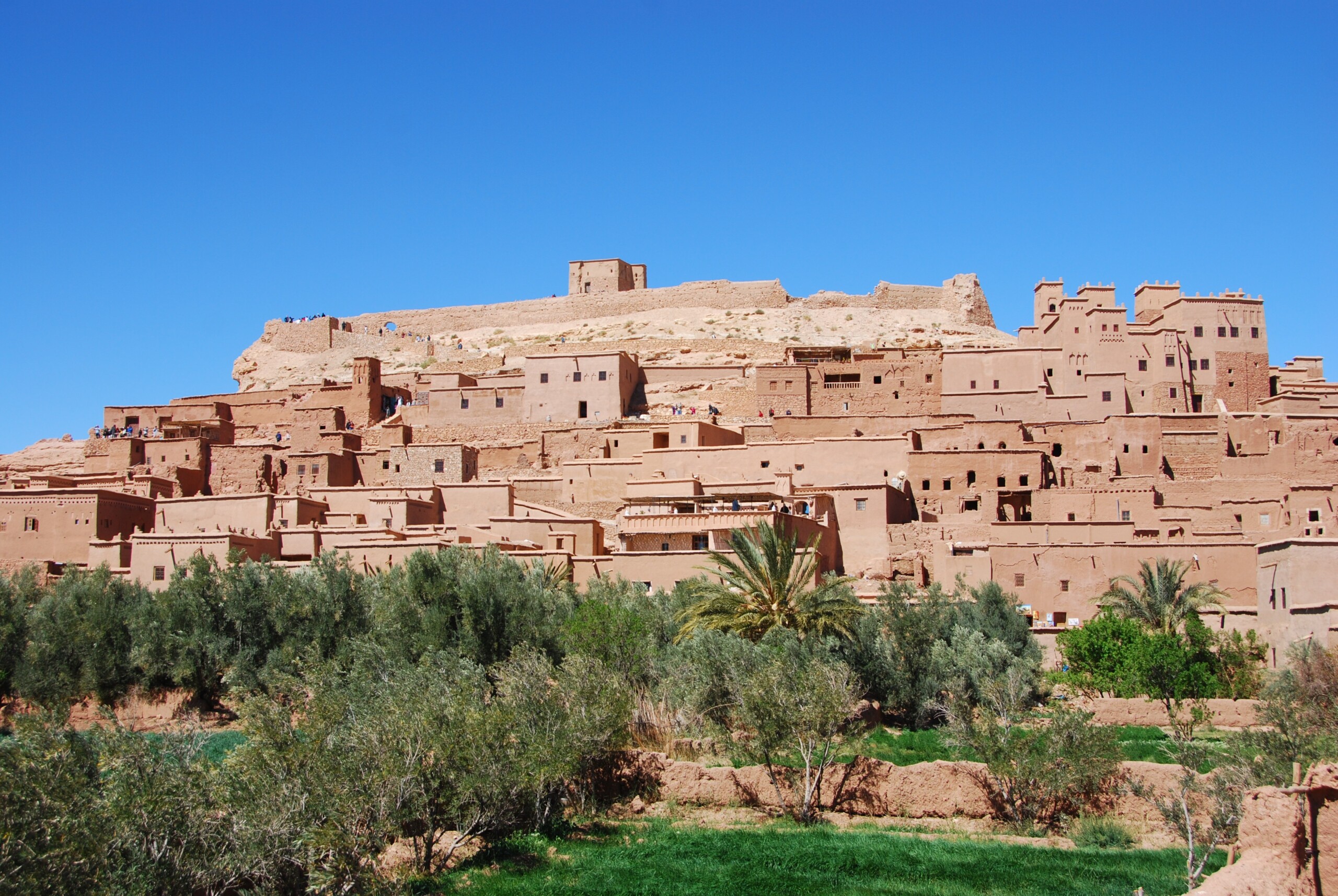
The road climbs over the High Atlas via the Tizi n'Tichka pass, with a stop at the Telouet Kasbah — once the seat of the powerful El Glaoui family — before continuing to the ksar of Ait Ben Haddou, a UNESCO World Heritage site and one of Morocco's most filmed locations. The day ends in Ouarzazate, gateway to the desert, for dinner and the night.
Called "a striking example of the architecture of southern Morocco" by UNESCO World Heritage
- Crossing of the High Atlas via the Tizi n'Tichka pass
- Telouet Kasbah
- Ksar of Ait Ben Haddou
- Overnight: hotel, Ouarzazate, dinner included
Ouarzazate — Skoura — Valley of Roses — Dades Valley
The morning takes in Ouarzazate's Atlas Film Studios and the Taourirt Kasbah, before continuing to the Skoura oasis to see the Amridil Kasbah, one of the region's best-known mud-brick buildings. The route then passes through Kalaat M'Gouna, at the heart of the Valley of Roses, before reaching the Dades Valley, with a stop at the "monkey fingers" rock formations along the way. Overnight in the Dades Valley, dinner included.
- Atlas Film Studios and Taourirt Kasbah in Ouarzazate
- Skoura oasis and the Amridil Kasbah
- The Valley of Roses at Kalaat M'Gouna
- Overnight: hotel, Dades Valley, dinner included
Dades Valley — Todra Gorges — Merzouga Desert
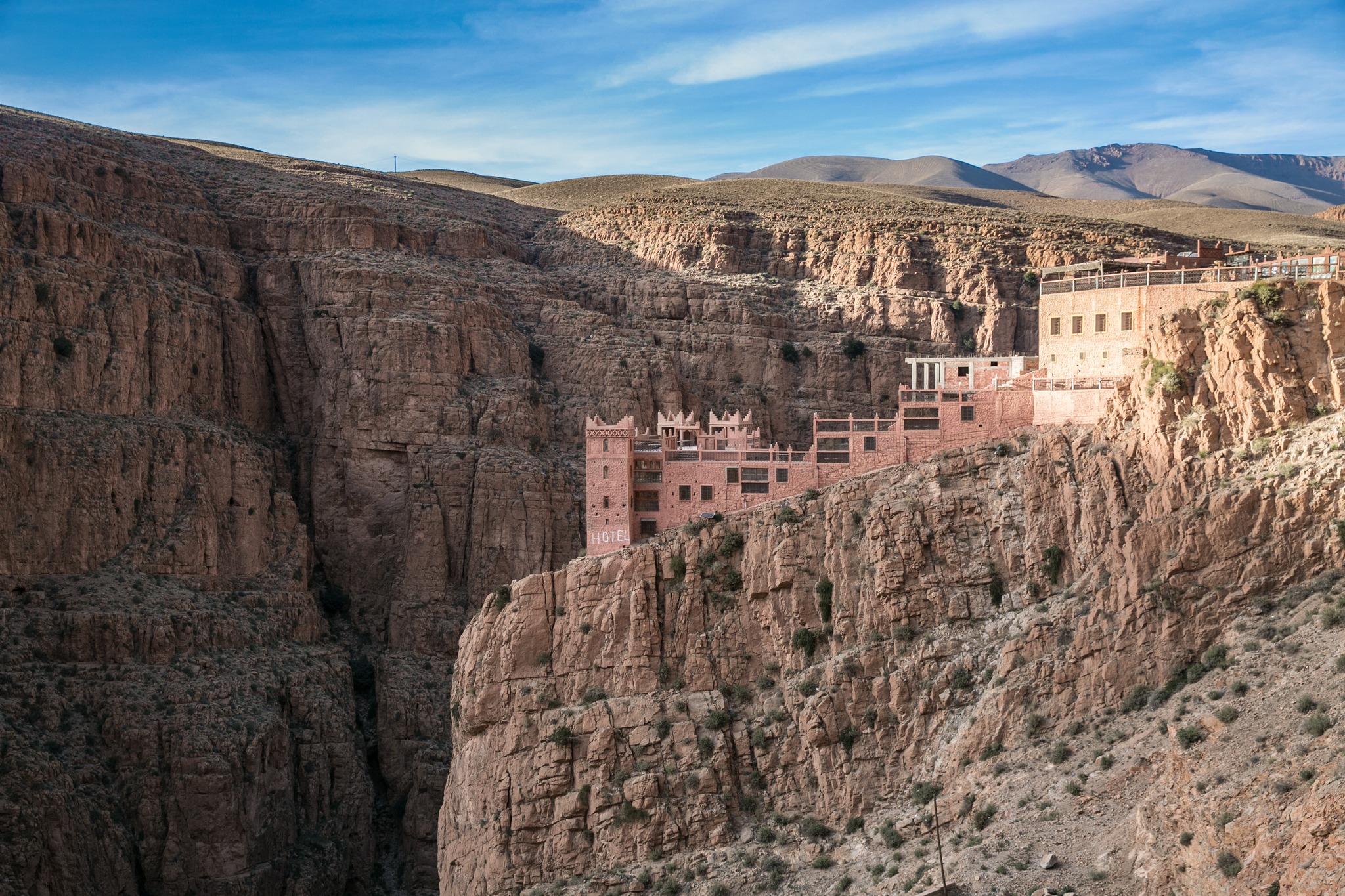
A morning walk through the Todra Gorge, where towering canyon walls narrow around the road, precedes the drive to Merzouga and the Sahara. By afternoon, a camel trek carries you into the Erg Chebbi dunes for sunset, followed by dinner, Berber music and a first night at a luxury desert camp under a genuinely dark sky.
- Todra Gorge on foot
- Camel trek into the Erg Chebbi dunes
- Sunset over the Sahara
- Overnight: desert camp, Merzouga, dinner included
Merzouga Desert Exploration
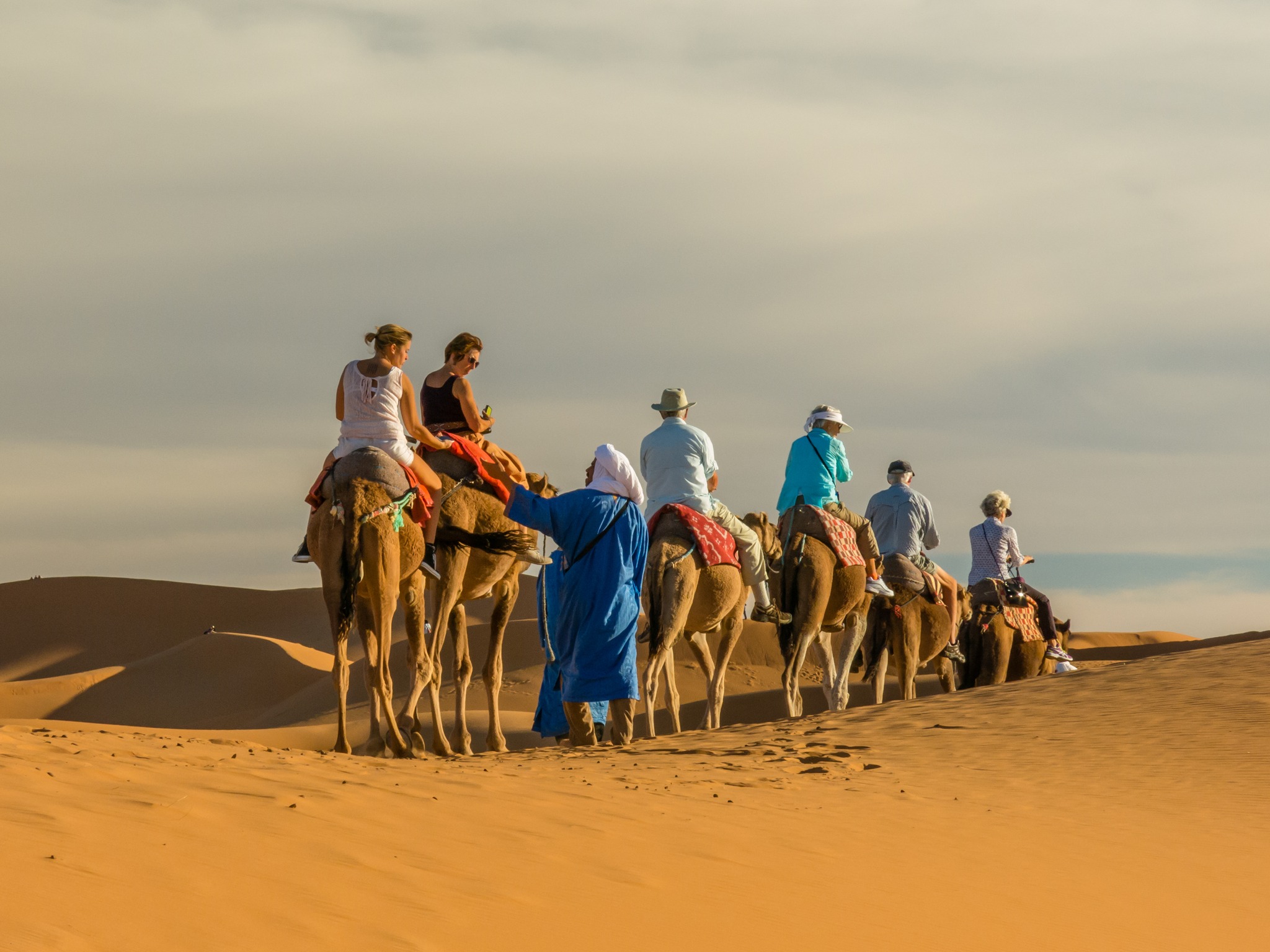
A full day dedicated to the desert. The village of Khamlia hosts a performance of Gnawa music, a spiritual tradition with roots in West Africa, followed by an off-road stop to share tea with a nomadic family in their tent. Late in the afternoon, a second camel ride returns you to the dunes for another night at the desert camp, with dinner and stars overhead.
- Gnawa music performance in Khamlia
- Tea with a nomadic family
- Second camel ride and night at the desert camp
- Overnight: desert camp, Merzouga, dinner included
Merzouga — Ziz Valley — Cedar Forest — Ifrane — Fes
Leaving the desert, the route passes through Rissani's lively market and a fossil workshop in Erfoud, then opens onto a panoramic view of the Ziz Valley oasis. After Midelt, the road climbs into the cedar forest, home to Barbary macaques often seen along the roadside, and continues through Ifrane — known for its alpine-style architecture — before reaching Fes for the night.
- Rissani market and the Erfoud fossil workshops
- Panoramic views over the Ziz Valley
- Barbary macaques in the cedar forest, and Ifrane
- Overnight: riad, Fes
Guided Day in Fes
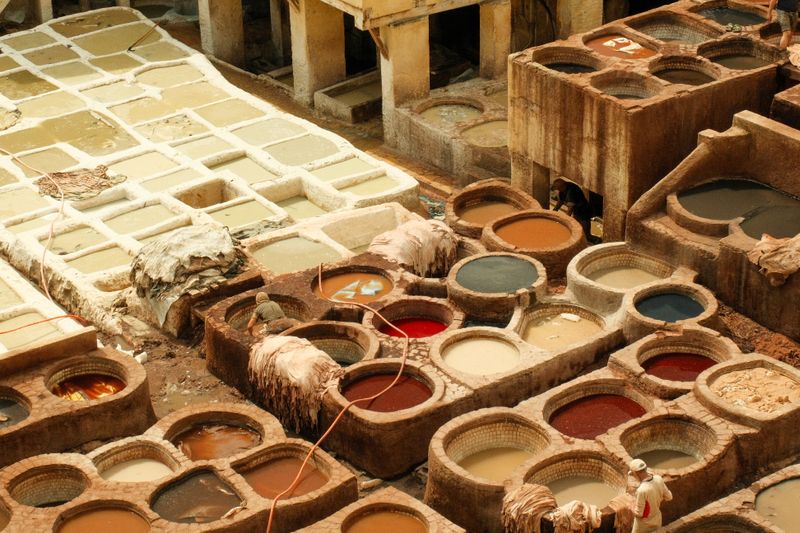
A full guided day through Fes el-Bali, the UNESCO-listed medina at the heart of Morocco's cultural capital. Highlights include the Royal Palace gate, the Bouanania Madrasa, the Nejjarine Fountain, the famous Chouara Tanneries, and the ancient Al Quaraouiyine University — recognised as the oldest continuously operating university in the world. The tour also takes in the Mellah, the historic Jewish quarter, and a panoramic viewpoint over the city.
Fes has "retained its status as the country's cultural and spiritual centre" — UNESCO World Heritage
- Guided walking tour of the Fes el-Bali medina
- Bouanania Madrasa, Nejjarine Fountain and the Chouara Tanneries
- Al Quaraouiyine University and the Mellah
- Overnight: riad, Fes
Fes — Meknes — Volubilis — Chefchaouen
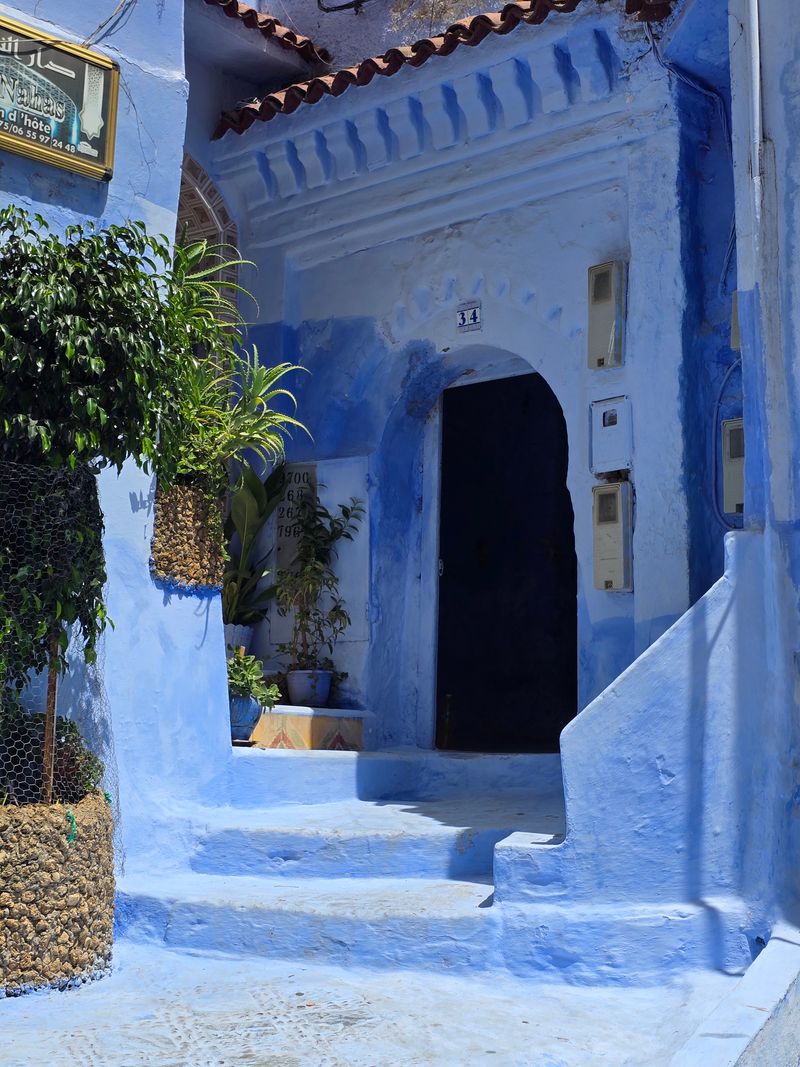
Meknes, another of Morocco's imperial cities, brings a stop at the monumental Bab El Mansour gate and the old royal stables, before continuing to the Roman ruins of Volubilis — a UNESCO World Heritage Site with well-preserved mosaics and archways. The day closes in Chefchaouen, the blue city tucked into the Rif Mountains, for an overnight stay.
Volubilis is inscribed as "an exceptionally well preserved example of a large Roman colonial town" — UNESCO World Heritage
- Bab El Mansour and the royal stables in Meknes
- Roman ruins of Volubilis
- Arrival in Chefchaouen
- Overnight: hotel, Chefchaouen
Chefchaouen — Rabat — Casablanca
A morning left free to wander Chefchaouen's blue alleyways one last time, before the drive to Rabat, Morocco's capital: the Kasbah of the Udayas, the Hassan Tower, and the Mausoleum of Mohammed V. From there it's on to Casablanca for the night.
- Final morning in Chefchaouen
- Kasbah of the Udayas, Hassan Tower and the Mausoleum of Mohammed V in Rabat
- Overnight: hotel, Casablanca
Casablanca — Marrakech
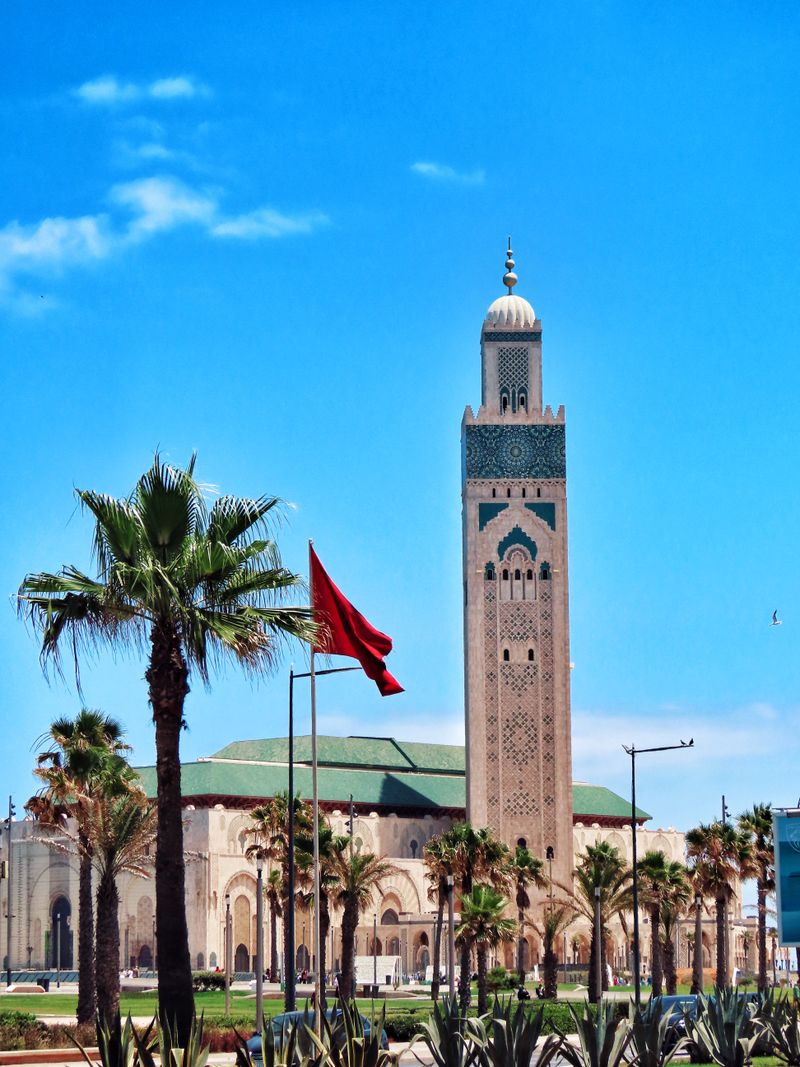
The morning is dedicated to the Hassan II Mosque, one of the largest in the world and one of the few in Morocco open to non-Muslim visitors. Afterwards, the drive returns to Marrakech via the highway, arriving in the evening for your final overnight stay.
- Hassan II Mosque in Casablanca
- Return drive to Marrakech
- Overnight: riad, Marrakech
Departure from Marrakech
After breakfast, a private transfer takes you to Marrakech Menara Airport in time for your flight, bringing your 12-day journey through Morocco to a close.
- Breakfast at the riad
- Private transfer to Marrakech Menara Airport
- End of services
What's Included in This 12-Day Tour?
Included
- Private, comfortable 4x4 or minivan with air conditioning
- Professional English-speaking driver-guide
- Fuel throughout the itinerary
- Pickup and drop-off at your accommodation in Marrakech
- 10 nights in a riad or hotel, with dinner and breakfast included
- 1 night in a traditional desert camp in Merzouga, private tent, with dinner and breakfast
- Camel trek to and from the desert camp
- Sunrise and sunset over the dunes
- Guided walking tours of Marrakech and Fes with local experts
Not included
- Lunches and drinks
- Entrance fees to monuments and attractions
- Personal expenses
- Tips for your driver-guide and local staff
Where Do This Page's Facts Come From?
- UNESCO — Medina of Marrakesh — official World Heritage listing.
- UNESCO — Ksar of Ait-Ben-Haddou — official World Heritage listing.
- UNESCO — Medina of Fez — official World Heritage listing.
- UNESCO — Archaeological Site of Volubilis — official World Heritage listing.
Frequently Asked Questions
What is the best time of year for this tour?
Spring (April–May) and autumn (September–October) offer the most comfortable temperatures for both the cities and the Atlas Mountains. Summer runs very hot in the desert and inland cities, while winter brings cool weather and occasional snow in the mountains.
What currency should I bring, and how do I handle money?
Morocco uses the Moroccan Dirham (MAD), which can't legally be brought in or taken out of the country, so you'll exchange money after arrival. ATMs are widely available, cards are accepted in most hotels and restaurants, and it's worth carrying small cash for souks, tips and street vendors.
What should I wear during this tour?
Modest, comfortable clothing works best, especially around religious sites — shoulders and knees covered is a good general rule. Loose trousers, long skirts and breathable layers suit the climate well, and a scarf is useful for both sun and wind in the desert.
Is it safe to drink tap water in Morocco?
Bottled water is the safer choice for visitors, even though many locals drink tap water without issue. It's inexpensive and widely available, and worth using for drinking and brushing your teeth throughout the trip.
Is this tour private, and can the itinerary be adjusted?
Yes, this runs as a private tour with your own driver-guide and vehicle throughout. The route, pace and number of days can all be adjusted if this exact itinerary isn't quite what you're looking for.
How do I get a price for this tour?
Pricing depends on your travel dates, group size and choice of accommodation, so share your details through the form below or over WhatsApp and you'll receive a tailored quote.
We're a message away.
This itinerary can also be shortened or extended — send your dates and questions and we'll help you find the right length for your trip.