
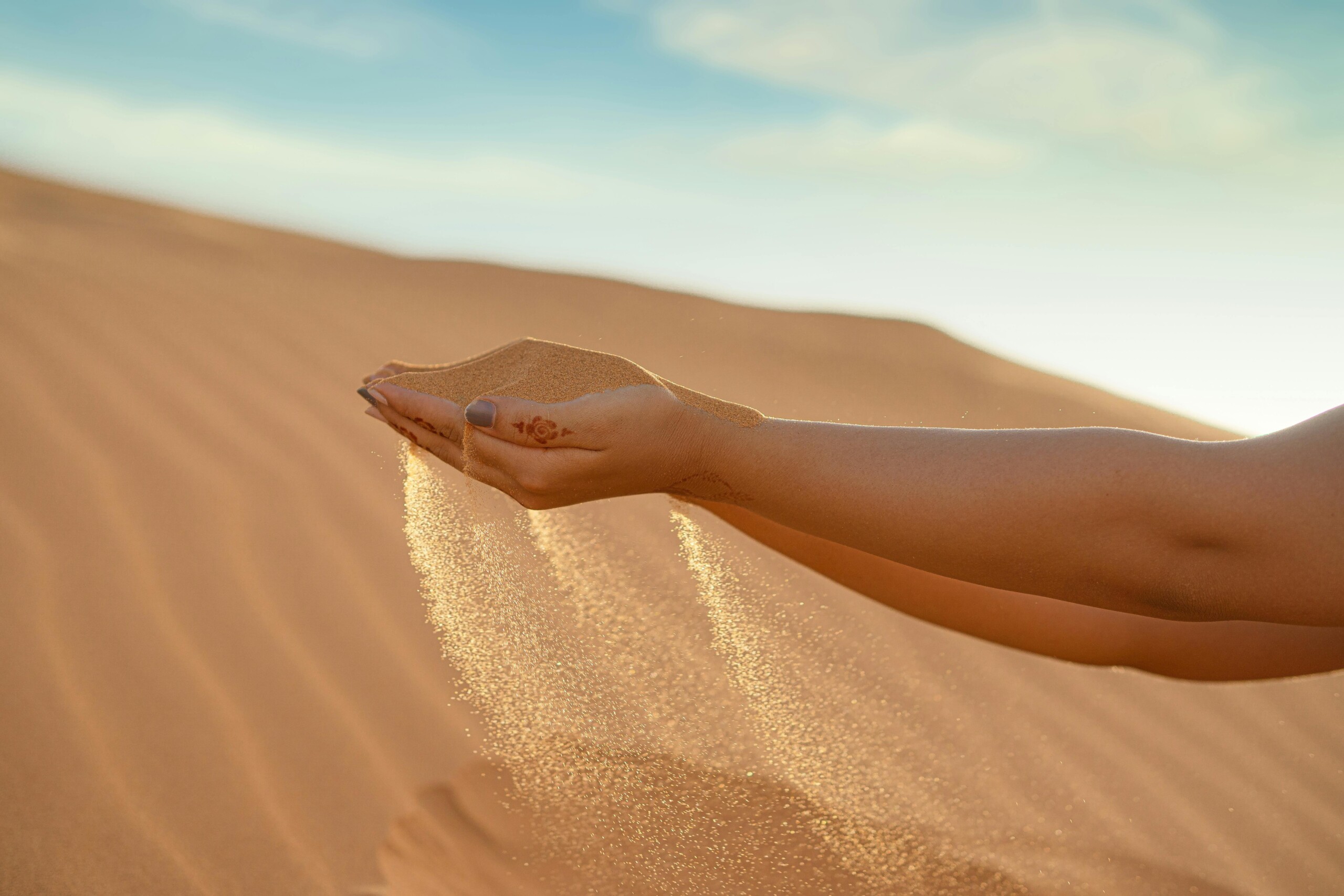
6-Day Private Desert Tour from Fes to Marrakech
The fullest version of the classic Fes-to-Marrakech crossing: two nights in the Erg Chebbi dunes instead of one, a visit to a nomad family, the Skoura palm oasis, and Telouet Kasbah added on the way — an unhurried route through the Middle Atlas, the Ziz Valley and the High Atlas.
Reviewed by Aziz Karaoui, Co-Founder & Morocco Travel Expert at Desert Morocco Tour · Updated September 13, 2026
From Fes to Marrakech Through the Sahara
The 6-day desert tour from Fes to Marrakech is a private crossing of Morocco, not simply transport between two imperial cities. It runs south from Fes over the Middle Atlas — through Ifrane and the cedar forests around Azrou — before following the Ziz Valley's palm groves to Merzouga and two full nights in the Erg Chebbi dunes. From there it turns west through the Todra and Dades gorges, the Skoura oasis and Ait Ben Haddou, with an extra day around Telouet before the Tizi n'Tichka pass into Marrakech.
Desert Morocco Tour is a Morocco-based operator specializing in private, tailor-made journeys. This is the fullest of our Fes-to-Marrakech desert crossings, distinct from the faster 3, 4 and 5-day versions: a second desert night, a dedicated nomad-family visit, and Skoura and Telouet added to the standard route, all with your own driver and vehicle throughout.
Tour at a Glance
Why Choose a 6-Day Route Over a Faster Crossing?
A faster crossing gets you from Fes to Marrakech with the highlights intact. Six days changes what those highlights actually include — a second desert night turns Merzouga from an overnight stop into a destination, and Skoura and Telouet add real depth to the second half of the route rather than rushing straight to the Tizi n'Tichka pass.
| 3 Days | 4 Days | 5 Days | 6 Days | |
|---|---|---|---|---|
| Identity | Efficiency | Balance | Immersion | Maximum depth |
| Merzouga nights | 1 | 1 | 2 | 2 |
| Nomad-family visit | – | – | Varies | Included |
| Skoura oasis | – | – | – | Included |
| Telouet Kasbah | – | – | – | Included |
| Pace | Fastest | Moderate | Relaxed | Slowest |
If you have less time, our 4-day Fes to Marrakech route covers the essentials at a faster pace.
Jump to a day
Request Your Private Tour Quote
Tell us your travel dates, number of travelers, preferred accommodation level and any special interests. We'll prepare a personalized quotation for your private six-day Fes-to-Marrakech journey through the Sahara.
How Does the 6-Day Route Unfold?
Every night's accommodation is confirmed in advance — this is a guide to how the days unfold, not a loose outline.
Fes to Merzouga via the Middle Atlas and Ziz Valley
The day starts with an early departure from Fes, climbing into the Middle Atlas through Ifrane and on to the cedar forests around Azrou, where wild Barbary macaques are often spotted along the road.
Past Midelt, the route follows the Ziz Valley south, a long corridor of palm groves running beside the Ziz River, before the tarmac gives way to open desert and the first dunes of Erg Chebbi come into view near Merzouga.
In the late afternoon, camels carry the group from the edge of the erg into the dunes to watch the sunset — a 4x4 transfer can replace this if you'd prefer not to ride — before arriving at a traditional Berber tent camp for the first of two nights in the desert.
- Middle Atlas via Ifrane and Azrou's cedar forests
- Ziz Valley
- Camel trek (or 4x4 alternative) into Erg Chebbi at sunset
- Overnight: desert camp, Erg Chebbi (night 1 of 2)
Erg Chebbi Sunrise and a Visit to a Nomad Family
Most travelers rise before dawn to climb a nearby dune and watch the sunrise turn the sand from grey to deep red and gold, before heading back to camp for breakfast.
The day continues with a visit to a nomad family living at the edge of the dunes — a local guide facilitates the visit, an opportunity to see how desert life is organized around herding and the seasons, share mint tea, and ask questions through the guide, approached as a respectful visit rather than a photo stop.
The afternoon leaves room for sandboarding, a swim at a nearby auberge pool, and a quieter second sunset over the erg before a second night is spent in the desert camp, this time deeper in the dune field.
- Optional sunrise dune climb
- Guided nomad-family visit
- Sandboarding and auberge pool time
- Overnight: desert camp (deeper in the dunes), Erg Chebbi (night 2 of 2)
Merzouga to Todra Gorge and the Dades Valley
Leaving the dunes behind, the route heads west to the Todra Gorge, where limestone cliffs rise sharply above a narrow river canyon. A short, flat walk along the gorge floor is included.
From Todra, the road continues into the Dades Valley, known as the Valley of a Thousand Kasbahs for its cluster of earthen fortresses set against rose-coloured rock. The night is spent at a kasbah-style guesthouse overlooking the valley.
- Todra Gorge walk
- Dades Valley
- Overnight: kasbah-style guesthouse, Dades Valley
Dades Valley to Skoura and Ait Ben Haddou
The morning covers more of the Dades Gorge before continuing to the Skoura palm oasis, one of the oldest and largest in Morocco, its groves dotted with historic kasbahs slowly returning to the earth.
From Skoura, the route passes through Ouarzazate, home to Morocco's film studios, before reaching Ait Ben Haddou, a UNESCO-listed fortified village and one of the country's best-preserved examples of earthen architecture — and a historic stop on the caravan route between the Sahara and Marrakech, long before its film appearances. The night is spent in Ouarzazate or at Ait Ben Haddou itself.
Called "a striking example of the architecture of southern Morocco" by UNESCO World Heritage
- Skoura palm oasis
- Ouarzazate film studios area
- Guided visit of Ait Ben Haddou
- Overnight: Ouarzazate or Ait Ben Haddou
Telouet Kasbah and the High Atlas Foothills
With an extra day built into the schedule, the morning is free to explore Ait Ben Haddou's ksar on foot before heading into the mountains toward Telouet, home to the crumbling but still striking kasbah of the former Glaoui pashas.
The afternoon continues through Berber villages and terraced valleys in the High Atlas foothills, at a noticeably slower pace than the drive to Marrakech usually allows. The night is spent in a mountain guesthouse before the final crossing the next day.
- Ait Ben Haddou on foot
- Telouet Kasbah
- High Atlas foothill villages
- Overnight: mountain guesthouse
Over the Tizi n'Tichka Pass to Marrakech
The final morning crosses the Tizi n'Tichka pass, the highest major road pass in Morocco, with sweeping views over the High Atlas before the road descends toward the plains around Marrakech.
The tour concludes with drop-off at your riad or hotel in Marrakech, typically around midday or early afternoon, bringing the six-day crossing from Fes to a close.
- Tizi n'Tichka pass crossing
- Drop-off in Marrakech
- Trip ends: Marrakech
Why Spend Two Nights in the Merzouga Desert?
A single desert night usually means: arrive, watch sunset, sleep, leave. The second night on this itinerary is what turns the Sahara from an overnight stop into a destination — a full day between the two nights for the nomad-family visit, sandboarding, and a second sunset, rather than moving on right after breakfast. The two nights are typically spent in different camps: the first reached directly by camel from the edge of the erg, the second deeper in the dune field, giving a genuinely different perspective each night.
A Respectful Visit With a Nomad Family
A local guide facilitates the visit and translates conversation, so it's a genuine exchange rather than a staged stop. We ask travelers to ask before photographing anyone directly, follow the family's lead on what's appropriate to see, and treat the visit as a chance to listen and learn about how desert life is organized around herding and the seasons — not as a sightseeing checkbox. See our Responsible & Sustainable Tourism in Morocco page for more detail.
Todra Gorge vs. Dades Valley: What's the Difference?
Todra Gorge
A narrow limestone canyon where the cliffs close in sharply above a river — best experienced on foot along the flat gorge floor, and a popular spot with rock climbers for the same reason.
Dades Valley
A broader valley, known as the Valley of a Thousand Kasbahs for its cluster of earthen fortresses set against rose-coloured rock — more about the drive and the scenery than a single walking stop.
Visiting both on the same day, as this itinerary does, gives a fuller picture of the region than either alone — the tight drama of Todra's canyon walls, followed by the open, kasbah-dotted scale of Dades.
Private vs. Shared Fes to Marrakech Desert Tours
A shared desert tour runs on a fixed schedule with other travelers in the vehicle. This tour is private throughout — your own driver and vehicle, with the pace and stops adjustable for your group, from departure time to how long you linger at a viewpoint.
It doesn't mean private access to Ait Ben Haddou or the gorges — those remain public sites open to any visitor. What's private is the vehicle, the schedule, and the ability to adjust the plan.
- Your own driver and vehicle, not a shared minibus
- Departure time and stops adjusted to your group
- Photography stops without holding up other travelers
- Route can run in either direction, Fes-Marrakech or Marrakech-Fes
- Accommodation and pace customizable before booking
What Makes This Tour Premium?
Not the desert camps alone — the accommodation on this route is traditional Berber tent camps and kasbah-style guesthouses, comfortable rather than five-star. What's genuinely premium is structural: six days rather than a rushed three-day crossing, a private vehicle throughout, a second desert night that turns Merzouga into a destination, and route depth (Skoura, Telouet) that faster versions skip entirely. If you'd like to upgrade specific nights to a higher category where available, mention it when requesting your quote.
Accommodation & Private Transportation
Where You Stay
Traditional Berber tent camps for the two Erg Chebbi nights, a kasbah-style guesthouse in the Dades Valley, accommodation in Ouarzazate or at Ait Ben Haddou, and a mountain guesthouse near Telouet. Exact properties depend on availability, your travel dates and preferred category.
Private Transportation
A private vehicle with your own driver for the full six days, door-to-door from your Fes riad or hotel to your Marrakech riad or hotel. Fuel and daily logistics are handled throughout, so the only decision left to you each day is how you'd like to spend it.
What's Included & What's Not
Included
- Private transport with driver throughout
- Two nights in Berber tent camps in the Erg Chebbi dunes
- Sunset camel trek (4x4 alternative available)
- Guided visit to a nomad family near Merzouga
- Breakfast included on all six days
- Dinner included at the desert camps
- Guided visit of Ait Ben Haddou
Not Included
- International flights
- Lunches
- Dinners outside the desert camps
- Entrance fees to monuments and museums
- Travel insurance
- Tips for your driver and local staff
How Much Does a 6-Day Fes to Marrakech Desert Tour Cost?
There's no single fixed price for this route, because cost depends on group size, travel dates, accommodation category and any optional upgrades. Request a quote with your dates and group size, and you'll receive a full breakdown to compare against other operators.
Where Do This Page's Facts Come From?
- UNESCO — Ksar of Ait-Ben-Haddou — official World Heritage listing.
Everything You Need to Know
What makes the 6-day tour different from the 5-day version?
The main addition is a second night in the desert, spent deeper in the Erg Chebbi dunes, along with a dedicated visit to a nomad family and an extra day near Telouet Kasbah before reaching Marrakech.
Are both desert nights spent in the same camp?
Typically the first night is in a camp accessed directly by camel from the edge of Erg Chebbi, and the second night is in a different camp deeper in the dune field, giving a slightly different desert experience each night.
Is camel riding mandatory?
Camel trekking is part of the standard itinerary, but a 4x4 transfer to the desert camp can be arranged instead if you'd prefer not to ride.
What happens during the nomad family visit?
A local guide brings the group to meet a nomad family living at the edge of the dunes, offering a chance to see how desert life is organized and to share mint tea and conversation, translated by the guide.
Is this tour private or shared with other travelers?
It runs as a private, tailor-made tour with your own driver and vehicle throughout, so the pace and stops can be adjusted for your group.
What is Erg Chebbi, and is it part of the Sahara?
Erg Chebbi is a field of sand dunes near Merzouga, on the edge of the Sahara Desert in southeastern Morocco — one of Morocco's two main accessible dune fields, and the one this itinerary visits.
Does the tour visit Todra Gorge and Dades Valley?
Yes, both are visited on Day 3, with a short walk included at Todra Gorge and an overnight at a kasbah-style guesthouse in the Dades Valley.
What is Skoura known for?
Skoura is one of Morocco's oldest and largest palm oases, its groves dotted with historic earthen kasbahs — a quieter, more rural stop than Ouarzazate or Ait Ben Haddou nearby.
Is Ait Ben Haddou UNESCO-listed?
Yes, it's a UNESCO World Heritage Site, recognized for its earthen architecture and historic role on the caravan route between the Sahara and Marrakech.
Why does this itinerary include Telouet?
Telouet's kasbah, once the seat of the powerful Glaoui family, is a stop most shorter Fes-to-Marrakech routes skip. Including it, with an extra day for the High Atlas crossing, is what most distinguishes this six-day version.
What is included in the desert portion of the tour?
Private transport with driver throughout, two nights in Berber tent camps in the Erg Chebbi dunes, a sunset camel trek (4x4 alternative available), a guided visit to a nomad family near Merzouga, and breakfast included on all six days.
How much does the 6-day Fes to Marrakech desert tour cost?
Cost depends on group size, travel dates and accommodation preference, so we provide a personalized quotation rather than a fixed listed price.
Can the tour start in Marrakech and end in Fes instead?
Yes, the route can be reversed to start in Marrakech and finish in Fes at no extra cost — just let us know your preferred direction when booking.
What is the best time of year for this tour?
Spring (March to May) and autumn (September to November) offer the most comfortable temperatures for the desert and the gorges. Summer is very hot in Merzouga; winter nights in the desert camps can be cold.
What should I pack for two nights in the desert?
Warm layers for the evenings and early mornings, comfortable closed shoes for the dunes, sunglasses, and a scarf or hat for sun and sand — desert nights stay cool even in warm seasons.
Is this itinerary suitable for families and older travelers?
Yes. It's rated easy — mostly vehicle-based with short walks — though the daily driving is worth discussing in advance for young children or travelers with mobility concerns.
Can this itinerary be customized?
Yes. Accommodation category, pace, and specific stops can all be adjusted before your trip is confirmed, and the route can run in either direction.
Prefer a Faster Crossing?
If six days is more than you have, these alternatives cover the same Fes-to-Marrakech route at a faster pace.
Start Planning Your Fes-to-Marrakech Sahara Journey.
Get a tailor-made quote for the 6-day Fes to Marrakech desert tour, or ask us anything about the route, the camps, or the gorges.